
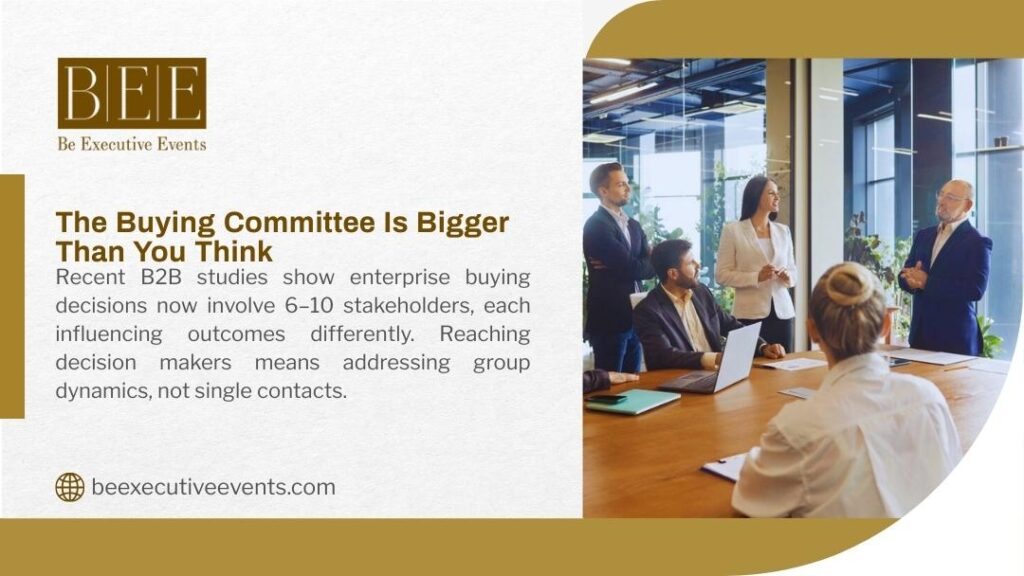
B2B decision makers are harder to reach than ever. Research from Shopify, shows that the average B2B buying decision involves 6 to 10 people, each armed with more than four pieces of information they’ve independently gathered.
You’re not just trying to reach one person. You’re trying to reach a group.
This guide shows you how to reach decision makers in B2B before they’ve narrowed their choices. You’ll learn which channels work, what messages break through, and how to build relationships that put you on the shortlist early.
Why Traditional B2B Outreach No Longer Works
Cold calls don’t work like they used to. Email open rates keep dropping. Understanding how to reach decision makers in B2B means recognizing these shifts in buyer behavior.
LinkedIn connection requests get ignored. The methods that worked five years ago fail today because B2B decision makers changed how they buy.
Decision makers now complete most of their research before ever talking to a vendor. They use search engines, read peer reviews, watch demos, and compare options entirely on their own. Your sales team enters the conversation after the real evaluation has already happened.
The group dynamics make everything harder. You might reach the CFO, but the CTO, operations lead, and procurement team all have veto power. Each person brings their own priorities, timeline, and preferred information sources.
| Challenge | Impact on Outreach | What This Means for You |
| Multiple decision makers | 6-10 people involved per deal | Must reach and convince entire group, not one person |
| Self-directed research | 70%+ of journey happens before contact | Need visibility during early research phase |
| Preferred vendor bias | 81% have favorite before first call | Must build trust before formal evaluation starts |
| Information overload | Hundreds of vendor messages weekly | Your message must stand out immediately |
| Longer sales cycles | Average 10+ months for complex deals | Requires sustained engagement over time |
Generic outreach bounces off these barriers completely. Messages that don’t address specific business challenges get deleted. Pitches that ignore the broader buying group waste everyone’s time.
Where B2B Decision Makers Actually Pay Attention
You can’t reach decision makers if you’re looking in the wrong places. Different channels work for different stages of their journey. Best channels to reach c-suite executives depend on whether you’re building awareness or closing deals.
Industry Events Create Face-to-Face Access
Executive conferences, roundtables, and VIP dinners remain the most direct way to reach decision makers in B2B. When executives attend events, they expect to have business conversations. They’re not screening you out. They’re actively looking to connect.
The format matters more than attendance numbers. For a side-by-side look at the options, see our guide to events senior buyers will actually attend in 2026. A 300-person conference gives you brief introductions at best. A 25-person executive dinner creates actual relationship time. If you are asked to say a few words at the table, read our advice on speaking well in an executive room before you stand up. Our dinner marketing for enterprise sales playbook shows how to convert those seats into closed enterprise contracts. Small, curated gatherings let you have substantive conversations that large events cannot provide. We break down how intimate events compare to conferences for B2B so you can pick the format that actually holds an executive’s attention.
This is the difference between noise and signal, curating prestige leadership conversations in a noisy world is what makes these smaller formats so effective at reaching decision-makers who tune out everything else.
Be Executive Events has spent years creating these high-value environments for senior decision makers across North America, Europe, and Asia. The executives who attend come specifically to discuss strategic challenges with peers and potential partners.
- Target events where your ideal decision makers speak, sponsor, or attend regularly
- Participate in sessions rather than just working the room between talks
- Prepare conversation topics tied to their current business priorities
- Schedule follow-up meetings while you’re both at the event
- Reference specific event discussions in your outreach afterward
Events work because they bypass the normal gatekeepers. You’re not cold-calling an assistant or hoping an email gets opened. You’re having real conversations with the exact people who make decisions.
Peer Recommendations Open Doors Cold Outreach Cannot
B2B decision makers trust referrals from people they know far more than any marketing message. When a respected colleague recommends your company, you skip the entire trust-building phase.
Map your network strategically. Who do you know that also knows decision makers at your target companies? Former colleagues, industry association contacts, investors, and advisory board members all create potential introduction paths.
The ask matters as much as the connection. Don’t request vague “I’d love to connect” introductions. Be specific about why you want to meet and what value you bring. Make it easy for your contact to explain why the introduction benefits both parties.
- Research which decision makers you need to reach and who might know them
- Provide your connection with clear talking points about your value
- Offer to draft the introduction message so they can forward it directly
- Follow up quickly when introductions are made (within 24 hours)
- Report back to the person who made the introduction about outcomes
From my experience, warm introductions convert at 10-15 times the rate of cold outreach. The time you invest in activating your network pays back immediately through higher-quality conversations.
Content That Educates Before It Sells
B2B decision makers consume enormous amounts of content during their research phase. They read articles, download reports, watch webinars, and compare vendor information across multiple sources.
Your content must provide genuine value without requiring they talk to sales. Research reports with original data work well. Analysis of industry trends helps them think differently about their challenges. Case studies that show measurable results demonstrate proof.
The key is visibility during the research phase, not just when they’re ready to buy. How to market to c-level executives means showing up in the places they look for information long before they’re evaluating specific vendors.
| Content Type | Best Use Case | Where It Works | Decision Maker Value |
| Research reports | Demonstrate thought leadership | LinkedIn, email, your website | Helps them understand market trends |
| Webinars | Teach specific skills or frameworks | Event platforms, LinkedIn ads | Actionable learning they can apply |
| Case studies | Show proof of results | Website, sales conversations | Evidence your approach works |
| Articles | Build ongoing visibility | Industry publications, LinkedIn | Keeps you top of mind over time |
Quality beats quantity every time. One exceptional report that decision makers actually read and share does more than ten mediocre blog posts that no one engages with.
Multi-Channel Strategies That Build Momentum
Single-touchpoint outreach rarely succeeds with B2B decision makers. Modern strategies for how to reach decision makers in B2B require multiple exposures across different channels.
They need multiple exposures across different channels before they recognize your name and understand your value.
The pattern that works combines online visibility with offline relationship development. You might publish research they find through search, connect on LinkedIn after they read your content, meet them at an industry event, then follow up with a personalized email.
Each touchpoint should add new value or context. Don’t repeat the same message across every channel. LinkedIn might introduce your perspective on industry challenges. An event conversation could focus on their specific situation.
Email follow-up shares additional resources relevant to what you discussed.
- Build Visibility Before Direct Contact
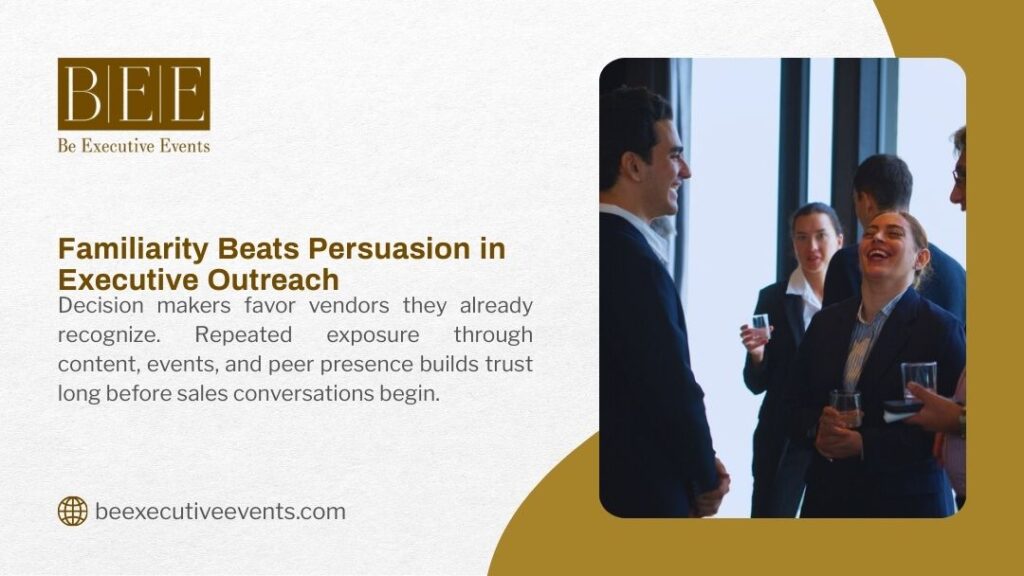
Decision makers respond better to outreach from companies they already recognize. Consistent presence in the right places makes your eventual contact feel natural rather than random.
Share insights on LinkedIn where your target decision makers spend time. Comment thoughtfully on industry discussions. Publish analysis that demonstrates you understand their challenges. The goal is name recognition before you ever send a connection request.
Speak at industry events or moderate panels where decision makers attend. Even if you don’t have direct conversations at the event, they see you as part of the expert community. Alternatives to cold outreach for executives often work better because they build familiarity over time.
- Post valuable insights 2-3 times weekly on platforms decision makers use
- Contribute guest articles to publications they read regularly
- Participate in industry associations and working groups they join
- Sponsor or speak at events that attract your target audience
- Build a content library that ranks for topics they search
This approach takes longer than cold outreach, but it positions you as a known entity rather than an unknown vendor. When people ask how to reach decision makers in B2B, this visibility-first method consistently outperforms direct pitching.
When you do reach out directly, they’ve already seen your name multiple times.
- Coordinate Timing Across Your Team
B2B decision makers hate when three people from your company contact them with different messages in the same week. It signals poor internal coordination and wastes their time.
Map your outreach strategy across marketing, sales, and customer success. Who’s responsible for initial awareness? Who handles direct outreach to specific titles? When does sales get involved?
Clear handoffs prevent the embarrassment of a decision maker getting an automated marketing email the day after your VP had a strategic conversation with them.
- Use Account-Based Approaches for High-Value Targets
When targeting specific companies with complex buying groups, C-level lead generation strategies require coordination across the entire account. You can’t just reach one decision maker. You need visibility with the full group.
Research the complete buying committee at your target companies. Identify the CFO, CTO, operations lead, and any other roles with influence. Develop messaging tailored to each role’s specific priorities.
Coordinate your outreach so different team members engage different stakeholders, but the overall message stays consistent. The CFO hears about ROI and risk reduction. Our breakdown of what finance chiefs actually respond to helps you shape that part of the campaign.
The CTO learns about integration and technical architecture. Operations sees process improvement and efficiency gains.
| Account-Based Element | Purpose | Responsible Team | Timeline |
| Account research | Map buying committee | Sales & marketing | Week 1-2 |
| Persona messaging | Role-specific value props | Marketing | Week 2-3 |
| Multi-thread outreach | Reach multiple stakeholders | Sales development | Week 3-8 |
| Executive engagement | C-suite relationship | Sales leaders | Week 6-12 |
| Proposal development | Address full committee needs | Sales & solutions | Week 10-14 |
Account-based approaches work best for deals worth $100K+ where the investment in research and coordination pays back through higher win rates.

Common Mistakes That Waste Your Time
Most B2B companies make predictable errors when trying to reach decision makers. These mistakes burn budget, frustrate your team, and damage your reputation with the exact people you’re trying to influence.
The biggest error is treating all decision makers the same. A CFO cares about financial risk and ROI. A CTO wants technical architecture details. Operations leaders focus on process efficiency and change management. Generic messages fail because they don’t speak to specific priorities.
Another common failure is the lack of patience. How to get meetings with executives takes time, especially for large deals with complex buying groups.
Companies that give up after two weeks miss opportunities that might have closed after three months of consistent, value-focused engagement.
- Don’t pitch before you understand their specific challenges and buying process
- Don’t ignore the full buying committee to focus only on one contact
- Don’t send the same message to multiple people at one company
- Don’t give up after one or two attempts with no response
- Don’t forget to research recent company news and industry developments
Length kills engagement. Decision makers scan messages in seconds. If you can’t communicate your value in three short paragraphs, you’re asking for too much time. Edit ruthlessly before sending anything.
Bad timing undermines good messages. Reaching out during their fiscal year-end, right before major industry events, or during known busy seasons means your message competes with urgent priorities. Research their business calendar and plan outreach for receptive periods.
Build Relationships That Put You on the Shortlist Early
Be Executive Events creates environments where decision makers connect with potential partners before formal buying processes start. Our curated executive gatherings bring together senior leaders from global enterprises for focused discussions on strategic challenges.
These programs work because they respect executive time while delivering genuine value. Participants don’t just collect business cards. They have substantive conversations with peers facing similar challenges and with companies that can help solve them.
When you understand the complexity of reaching decision makers in B2B markets, you realize the most valuable opportunities come from relationship development over time. The connections formed in strategic settings create access that traditional sales tactics cannot match.
Contact Be Executive Events to learn how participation in our global executive programs can accelerate your relationships with the decision makers who matter most to your business growth.
Final Thoughts on Reaching B2B Decision Makers
How to reach decision makers in B2B requires patience, research, and multi-channel persistence. You’re trying to reach groups, not individuals. You need visibility early in their research process, not just when they’re ready to talk to vendors.
Focus on the channels where decision makers actually spend time. Events create face-to-face access. Peer referrals build instant credibility. Content establishes expertise during the research phase. Account-based strategies coordinate efforts across complex buying committees.
Track what works for your specific market. Decision maker preferences vary by industry, company size, and business conditions. Test approaches, measure results, and invest more in the channels that generate qualified conversations.
The decision makers you want to reach are accessible. They just require strategies that respect their time, speak to their specific priorities, and provide value before asking for anything in return.
Frequently Asked Questions About Reaching B2B Decision Makers
What’s the most effective way to reach B2B decision makers?
Warm referrals from mutual contacts work best, combined with consistent visibility through content and industry events. Decision makers respond to companies they already recognize rather than cold outreach from unknowns.
How many touchpoints does it take to reach a decision maker?
Most successful engagements happen after 5-8 touchpoints across different channels over 6-12 weeks. The key is adding new value with each touchpoint rather than repeating the same message.
Should I focus on one decision maker or the entire buying group?
Always map the full buying committee for complex B2B sales. While you might start with one contact, decisions involve 6-10 people on average. Each stakeholder has different priorities, so tailor your messaging to address CFO concerns, CTO requirements, and operations needs separately.
How do I compete when buyers already have a preferred vendor?
Get involved earlier in their research process before they form preferences. Share thought leadership, participate in industry events, and build visibility months before they’re actively evaluating vendors.
What channels work best for different types of decision makers?
C-suite executives respond well to peer referrals and executive events. When the buyer is an IT executive, this CIO and CTO engagement guide walks through a tailored plan. When the buyer is an IT executive, this CIO and CTO engagement guide walks through a tailored plan. Technical decision makers engage with detailed content and product demonstrations. Operations leaders value case studies showing measurable results. Before you tailor outreach for each group, see how procurement and executives decide differently once a deal reaches the buying committee.
How to reach decision makers in B2B without cold calling?
Focus on three channels that work better than cold calls: warm referrals from mutual contacts, consistent visibility through thought leadership content, and face-to-face interactions at industry events.