
The fastest way to lose an executive audience is to open with a product narrative when the people in the room buy business outcomes. A curated executive gathering is not a conference hall: it is 6 to 26 senior decision-makers who cleared an evening to compare notes with peers and leave with something they can act on.
For field marketing and demand generation leaders in SaaS and enterprise technology, that changes how you structure, deliver and defend the material.
How to Present to C-Suite Executives at an Event
| Executive audience | What they care about | What to emphasize |
|---|---|---|
| CFO | Payback, cost, financial risk | ROI, payback period, cost exposure, financial impact |
| CIO | Integration, security, technical risk | Integration requirements, technical debt, implementation risk |
| CHRO | Adoption, workforce impact | Adoption, time to competence, employee impact |
| CEO / Founder | Growth, strategic impact, business risk | Revenue impact, growth opportunities, strategic priorities |
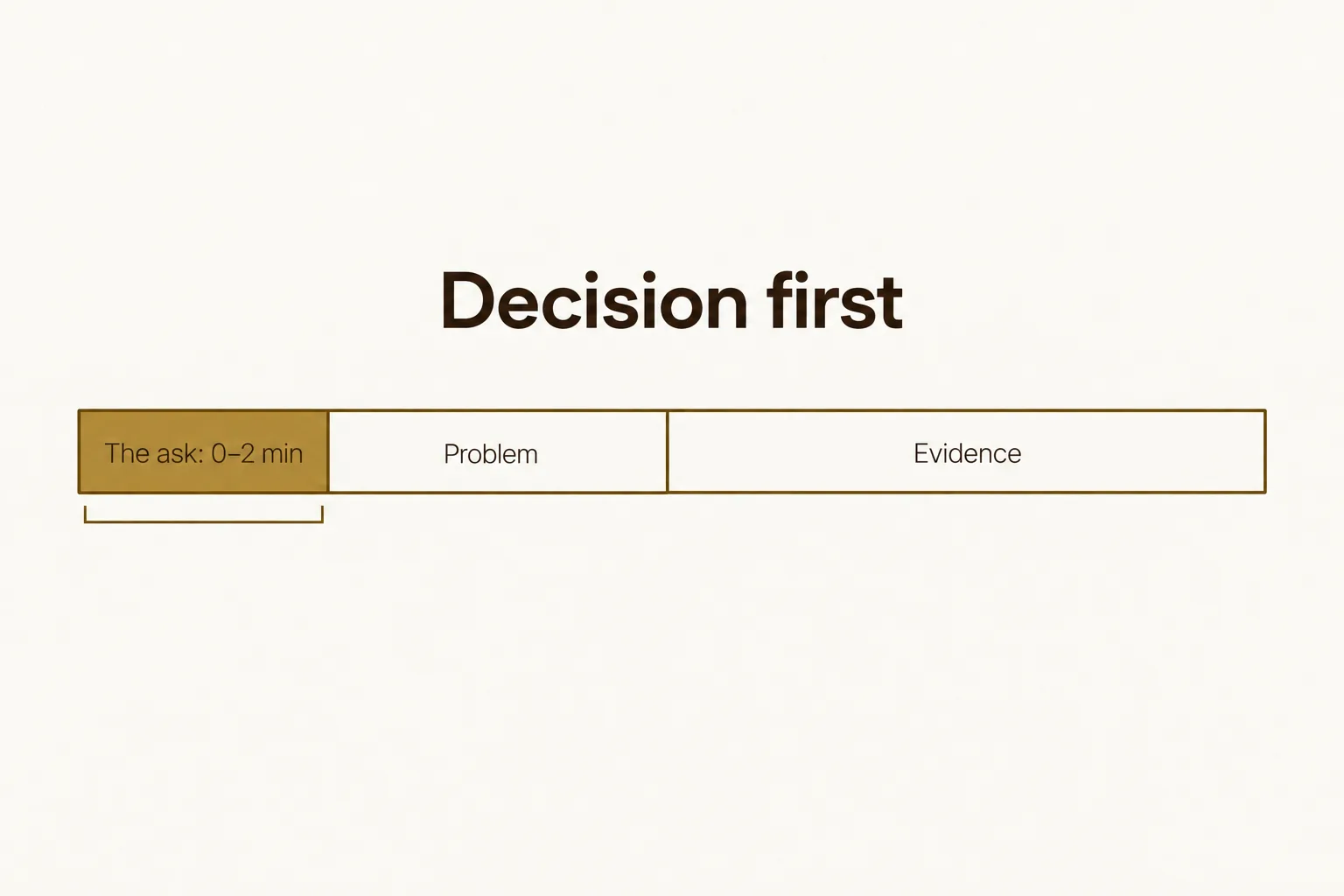
State the decision you want inside the first two minutes. Executive audiences want the recommendation early, with the remaining time spent on business context and supporting evidence. Only then set out the problem, what triggered the review, and why it matters this quarter.
Quantify in the listener’s own currency. A CFO hears payback period and risk exposure. A CIO hears integration risk and technical debt. A CHRO hears adoption and time to competence. Feature lists land nowhere with executive decision-makers.
The discipline that earns a reply from a high-value decision-maker (CEO, founder, owner) holds once you are in the room: lead with business outcomes tied to their current challenges.
Build the Deck for Discussion, Not a Lecture

Keep the main deck to high-level findings. Methodology, raw metrics and segment detail belong in an appendix you can jump to under questioning. One idea per slide, and numbers legible from the far end of a dinner table.
Plan 20 to 30 minutes of prepared speaking at most, and less at a dinner where the courses set the rhythm. Roughly half presentation, half conversation is the safer split. Pause after a key figure so it registers, and keep a two-minute version ready for the night the agenda compresses.
Prepare a one-page leave-behind so the discussion survives without slides, and design the content to provoke peer exchange rather than close a sale, because inspiration without a next action wastes the room.
Delivery: Executive Presence Under Interruption
Expect questions during the talk, not after it. Senior executives interrupt, and at an executive roundtable that usually means the material landed. Hold your position where you have evidence, concede a fair challenge without collapsing, and move on. Pace, volume and stillness carry more weight than polish.
Handle Q&A by Pre-Empting the Questions
Write down the ten hardest questions this specific attendee set will ask, then prepare the evidence for each. Forbes sets out seven questions to be ready for when presenting at the highest levels. Attendee profiles make objections predictable: role, industry and current initiative tell you where the pressure will come from. When a number is missing, say so and send it within 24 hours.
Adjust for the Format: Roundtable, Dinner or Virtual
| Event format | Presentation approach | Main goal |
|---|---|---|
| Executive roundtable | Open with a provocation and framing question, then facilitate discussion | Generate peer exchange and useful insights |
| Executive dinner | Skip the formal deck and use short interventions between courses | Build meaningful executive conversation |
| Virtual event / webinar | Use shorter segments, polls and chat prompts | Maintain engagement and extend the discussion |
| Branded virtual event | Follow the live session with an on-demand version | Reach invited executives who could not attend live |
Across UKI, DACH, BENELUX and NAMER, calibrate language and pacing to the market and use local moderators where you have them. Forward-looking content is what holds a CXO audience in every format.
The Preparation That Happens Before You Write a Slide
Knowing how to present to C-Suite Executives at an Event is only part of the preparation. The quality of the audience determines how relevant your examples, questions and recommendations can be.
Presentation quality is capped by audience quality.
Ten pre-approved executives with a live initiative in your category beat a full room, and a profile-matched list lets you write to known roles and real projects instead of a generic persona.
Best practices for inviting senior executives to events and peer groups start with lawful outreach by email, LinkedIn and trusted B2B data providers. The ICO is explicit that B2B marketing to named individuals requires a lawful basis under the UK GDPR and transparency about the purpose.
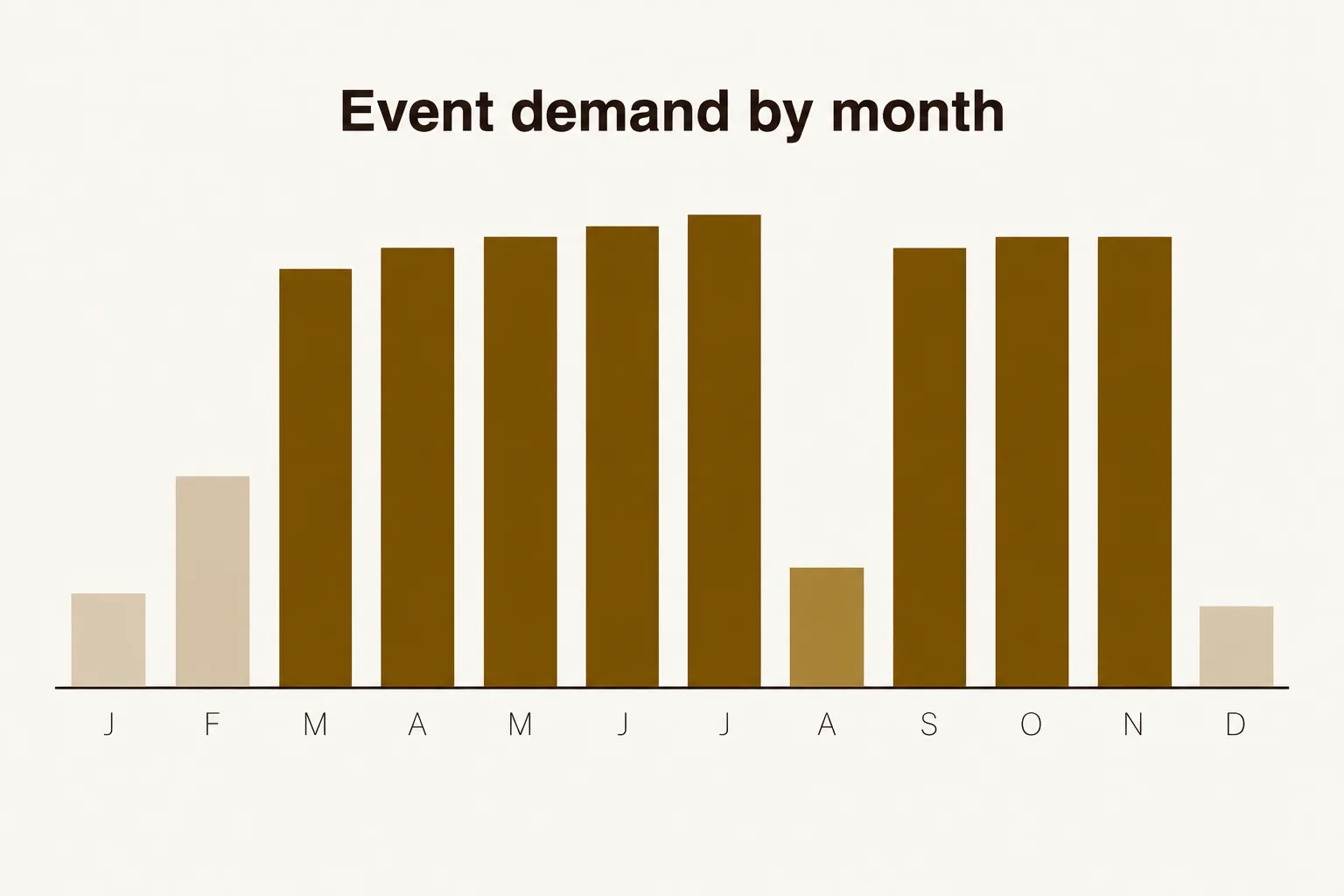
Timing decides who shows up. Demand concentrates from late February to July and again from September to early December, with a sharp August drop across Europe and a quiet late December. Event production management does not end at the door: post-event reporting on who attended, what they engaged with and what to do next is what turns a talk into a pipeline signal.
A Pre-Event Checklist
- Recommendation stated in one sentence
- Attendee list reviewed by name, role and current initiative
- Deck cut to high-level findings, appendix built
- Ten hardest questions drafted, with evidence
- Run time rehearsed at 70% of the slot, follow-up owner named
Frequently asked questions
How do you present to C-Suite Executives at an Event?
What are the 7 C’s of executive presence?
What are three things you should do during a meeting with C-suite executives?
How do you interact with C-level executives?
Is a slide deck necessary at an executive dinner?
Put the Right Executives in the Room
Structure and delivery only pay off in front of a genuinely senior, genuinely relevant audience. Getting the right ten CIOs or CFOs around a table is the part that happens months before anyone opens a deck.
If that is the gap, the first step is small: a virtual executive session, a curated dinner or roundtable of 6 to 26 CxOs, or audience acquisition support for an event you are already running. Talk to us about reaching C-level executives and the format can follow from there.