
Recent data shows that 95% of cold emails never get any response from C-suite leaders, and the average reply rate dropped to just 5.1% in 2024, down from 7% the year before.
All of this leads to one critical question: do executives read cold emails, or are most of these messages filtered out or ignored before they ever get real consideration?
This article shows you six proven alternatives to cold outreach for executives that deliver better results with less wasted effort.
You’ll learn which methods work best for reaching senior leaders, how to implement them effectively, and why warm approaches convert 4-10 times better than cold tactics.
Why Cold Outreach No Longer Works With Executives
Three major changes have made traditional cold outreach nearly useless for reaching C-suite leaders.
- Executive inboxes are more flooded than ever.
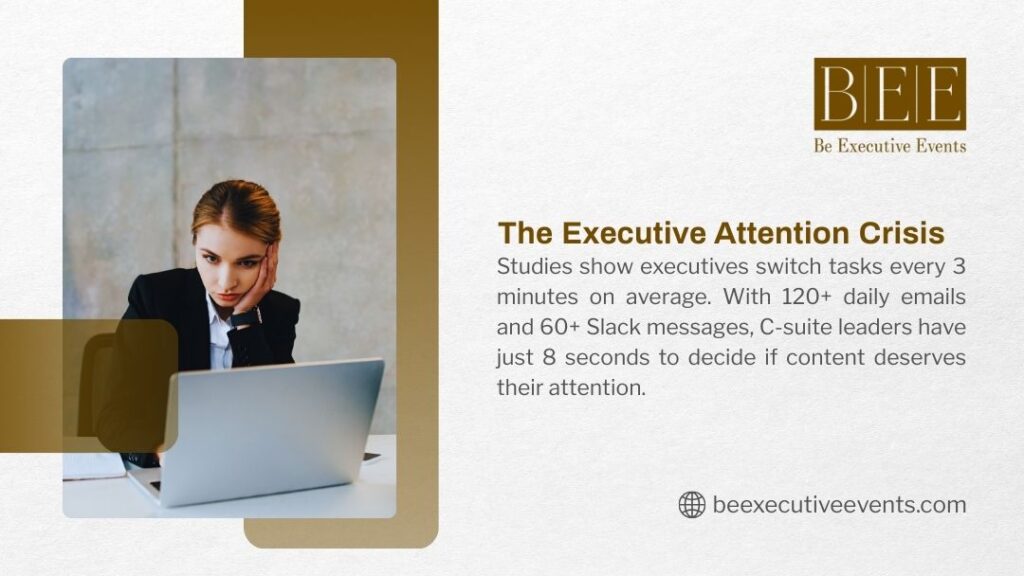
A typical CEO receives 120-150 emails per day, plus countless LinkedIn messages and meeting requests from their own team. Your cold email is competing with hundreds of other messages, most of which get deleted without being read.
- Email providers have tightened spam filters dramatically.
Google and Outlook’s anti-spam policies in 2024-2025 mean that even well-crafted emails can get lost before executives ever see them. Open rates for cold emails dropped from approximately 36% in 2023 to 27.7% in 2024, and in 2025 remained in the low-to-mid-20s on average (~20–28%) based on industry benchmarks.
- Trust has become the deciding factor in executive engagement.
Research shows that 92% of people trust recommendations from someone they know, compared to just those who trust online advertising or cold outreach. Executives make decisions based on trusted connections, not random messages from strangers.
| Challenge | Impact on Success | 2025 Data |
| Inbox overload | Messages get buried | 120-150 emails/day per executive |
| Spam filters | Emails never reach inbox | Only 27.7% open rate |
| Zero trust | Instant deletion | 5.1% average response rate |
| Competition | Other vendors crowd space | 306 emails needed per lead |
The executives you want to reach are accessible. They just ignore methods that don’t respect their time or come from sources they don’t trust. o learn more about why executives are ignoring your sales outreaches in 2026, read our comprehensive guide for full details.
6 Proven Alternatives to Cold Outreach for Executives
1. Warm Referrals and Introductions
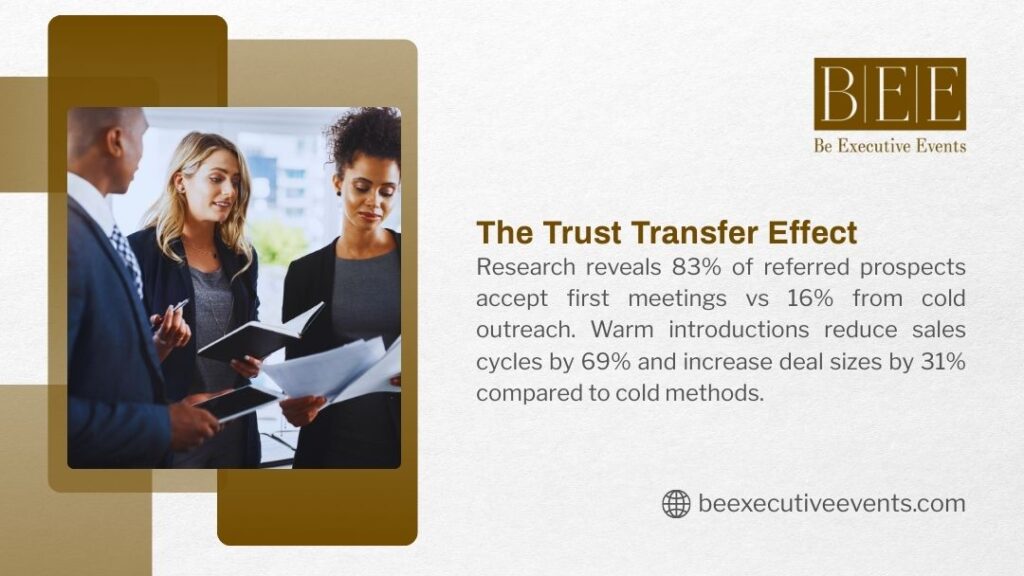
Warm referrals are hands-down the most effective alternatives to cold outreach for executives. Data from multiple studies shows that people referred by a friend or trusted connection are 4 times more likely to buy than those reached through cold methods.
The conversion difference is dramatic. Warm introductions close deals in an average of 3 months, while cold outreach takes 6 months or more. This happens because the trust transfer is immediate—you’re not starting from zero with a skeptical executive.
The challenge is that most organizations don’t have a system to generate referrals consistently. They wait for referrals to happen randomly instead of making them part of their outreach strategy.
How to build a referral system:
| Step | Action | Why It Works |
| Map your network | Identify mutual connections with targets | LinkedIn shows 2nd-degree connections |
| Ask satisfied clients | Request introductions to similar companies | Happy customers want to help |
| Offer value in exchange | Share insights or make introductions yourself | Reciprocity drives referrals |
| Make it easy | Provide a short message they can forward | Reduces friction for the referrer |
When you approach executives through people they already trust, the “what do they want?” suspicion disappears. The conversation starts with credibility already established.
2. Executive Events and Peer Roundtables
Executive events create face-to-face access without the barriers of cold outreach. Research shows that 50% of attendees agree that in-person B2B conferences provide the best networking opportunities, and 80% of C-suite leaders find moderated peer-to-peer discussions useful.
The format matters as much as the attendee list. Executives don’t waste time at poorly organized events with sales pitches disguised as content but they attend carefully curated gatherings where they can learn from peers and discuss strategic challenges.
Private roundtables work particularly well. If you are deciding where your next budget should go, our breakdown of booking executive meetings versus hosting events compares cost, speed and deal quality side by side. These smaller, focused sessions create space for genuine relationship development that you simply can’t get through digital channels or large conferences.
When you meet an executive at a well-run event, you’re not interrupting their day with an unwanted message. They’re already in the mindset to connect and explore new ideas with peers.
Be Executive Events specializes in creating these high-value environments where C-suite leaders gather for strategic discussions. The participants come specifically to connect, which makes these settings some of the best alternatives to cold outreach for executives.
3. Strategic LinkedIn Engagement
LinkedIn can be one of the most effective alternatives to cold outreach for executives when you use it correctly. The problem is most people treat it like cold email and wonder why it fails.
Your LinkedIn strategy should focus on two things:
- Building credibility
- Using mutual connections.
Don’t send connection requests with immediate pitches—executives delete these instantly.
Instead, engage with their content first. Leave thoughtful comments on posts or share insights about industry trends they care about. Build visibility over time so when you do connect, they already recognize your name.
Better approach: Follow their activity for 2-3 weeks Comment on 3-5 posts with genuine insights Send a connection request that references a specific post or shared interest Wait until accepted before discussing business topics
LinkedIn InMail messages see response rates of 18-25%, significantly higher than the 5% response rate of cold emails. But this only works when you’ve established some credibility first. Understanding how to market to c-level executives through thought leadership makes your LinkedIn presence far more effective than generic outreach.
4. Multi-Channel Orchestration
Multi-channel outreach has proven to be one of the most effective alternatives to cold outreach for executives. Data shows that prospects contacted through 3+ channels respond at 2 times the rate of single-channel efforts.
The key is coordination, not bombardment. Don’t blast an executive with the same message across five channels in one day. That looks desperate and gets you blocked everywhere.
Use a thoughtful sequence instead. Send a value-focused email. Wait 3-4 days, then follow up on LinkedIn with new information. A week later, try a phone call to their assistant about a specific topic. Two weeks after that, send relevant research with no ask attached.
Each touchpoint should add something new. The executives who eventually respond often say they saw multiple messages but only engaged when the timing aligned with their current priorities.
| Channel Combination | Response Rate Lift | Best Sequence |
| Email + LinkedIn | 2x increase | Email first, LinkedIn 3-4 days later |
| Email + Phone | 1.8x increase | Email context, call 1 week later |
| Email + LinkedIn + Direct Mail | 2.5x increase | Space over 2-3 weeks |
Combining digital and physical touchpoints works particularly well. An email followed by personalized direct mail and then a LinkedIn message creates multiple moments of visibility without feeling aggressive.
Learning how to get meetings with executives means accepting that single touchpoints rarely work anymore. The successful approach layers multiple channels strategically over weeks, not days.
5. Thought Leadership and Content Marketing
Thought leadership positions you as a peer rather than a vendor, which makes it one of the smartest alternatives to cold outreach for executives. When executives discover you through valuable content, they’re already interested in what you know.
The challenge is that most “thought leadership” is thinly disguised sales content. Executives see through this immediately and tune out.
Real thought leadership means sharing insights that help executives make better decisions, even if those decisions don’t involve buying from you. This includes:
- Publishing original research on industry trends
- Speaking at conferences executives attend
- Writing articles that address their strategic challenges
- Hosting podcasts with other industry leaders
This approach takes longer to generate results than direct outreach. But the quality of conversations you get is significantly better. Executives reach out to you instead of avoiding your messages.
Content-driven engagement works because it demonstrates expertise before you ever ask for a meeting. Executives evaluate whether you’re worth their time based on what you’ve already shared, not on your sales pitch.
6. Strategic Partnerships and Co-Marketing
Strategic partnerships create access to executive audiences that are impossible to reach through traditional outreach. When you align with organizations that already serve your target executives, you benefit from their credibility.
This is one of the most overlooked alternatives to cold outreach for executives, probably because it requires more setup than sending emails. But the results justify the effort.
Examples that work:
- Partner with industry associations that host executive events
- Co-host webinars with complementary service providers
- Sponsor research with organizations executives already trust
- Collaborate on content with established thought leaders
The partnership model works because it replaces “who are these people?” with “they’re working with [trusted organization].” That instant credibility shift changes the entire dynamic.
When you explore the best channels to reach c-suite leaders, partnerships often emerge as a force multiplier that makes other channels work better too.
How to Choose the Right Alternative for Your Situation
Not every approach works for every organization or goal. The best alternatives to cold outreach for executives depend on your specific situation.
For high-value strategic accounts, invest in multi-channel campaigns that combine warm referrals, executive events, and personalized content. The potential deal size justifies the extra effort and resources.
For building brand awareness with executives, focus on thought leadership and speaking opportunities. These create long-term credibility that supports all your other efforts.
If you need meetings quickly, prioritize warm referrals and partnerships. These deliver the fastest path from introduction to conversation because trust is already established.
| Your Priority | Best Alternatives | Timeline to Results |
| Strategic accounts | Warm referrals, events, multi-channel | 3-6 months |
| Brand awareness | Thought leadership, speaking, content | 6-12 months |
| Quick meetings | Referrals, partnerships | 1-3 months |
| Broad market reach | LinkedIn engagement, webinars | 3-9 months |
Track your results by method. Measure response rates, meeting quality, and revenue influence for each approach. Double down on what works for your specific audience and cut what doesn’t perform.

Why Executive Access Requires a Different Approach
The gap between cold outreach and warm alternatives continues to widen. In 2024, the average cold email response rate hovered around 5. By 2025, it has dropped even further, sitting closer to the low single digits.
At the same time, trusted introductions and strategic engagement continue to work exceptionally well. The 4x conversion advantage of warm referrals hasn’t changed. If anything, it’s becoming more pronounced as cold methods decline.
This creates an opportunity for organizations willing to invest in relationship-based strategies. While your competitors waste resources on cold outreach that doesn’t work, you can build systems that generate warm paths to the executives who matter most.
The work required is different. These alternatives to cold outreach for executives demand more strategy and coordination than blasting email lists. But the return on that effort—both in response rates and deal quality—makes it worth it.
Be Executive Events helps organizations accelerate this transition by creating structured opportunities to connect with C-suite leaders. We naturally identify executive decision-makers and bring them together for curated gatherings focused on strategic topics, creating paths to relationships that cold outreach can never replicate.
Contact us today to learn how participation in executive events can become part of your systematic approach to reaching senior leaders—without the waste and frustration of traditional cold outreach.