
Every week, companies spend thousands on ads that never reach the CEO’s desk. They blast messages across every platform, hoping something sticks, but executives never see their pitch.
The real question isn’t just where to advertise to reach c-level executives – it’s how to cut through the noise when these leaders receive 100+ pitches weekly.
Most marketers fail because they treat executive advertising like mass marketing with a bigger budget.
Here’s what you’ll learn:
- Which platforms actually deliver C-suite access in 2025
- How to target C-suite decision makers based on their media habits
- Cost-effective advertising channels for business executives
- Why executive events outperform digital ads for serious deals
- Measurement strategies that prove ROI to your board
This guide draws from Be Executive Events’ decade of experience connecting global brands with senior executives through targeted campaigns and strategic partnerships.
The Executive Media Landscape Has Changed
The days of reaching executives through print ads in Fortune magazine are over. Today’s C-level professionals consume content across multiple channels, but their attention remains harder to capture than ever.
Knowing where to advertise to reach C-level executives is no longer about choosing one channel, but it’s more about combining multiple, data-driven touchpoints that align with how leaders actually consume information.
| Platform Type | Executive Usage | Engagement Rate | Cost Range |
| LinkedIn (Premium) | 91% daily | 3-5% CTR | $8-15 CPC |
| Industry Publications | 67% weekly | 15-20% open | $5K-25K per placement |
| Executive Events | 45% quarterly | 60-80% participation | $10K-50K per event |
| Podcast Sponsorship | 72% monthly | 25% completion | $2K-10K per episode |
| Email (Curated Lists) | 55% daily | 8-12% CTR | $500-2K CPM |
Best Platforms to Reach C-Level Executives
LinkedIn: The Professional’s Platform
LinkedIn remains the gold standard for B2B advertising to C-level professionals. With 180 million senior-level influencers on the platform, it offers unmatched professional targeting capabilities.
The platform allows you to filter by job title, seniority, company size, and industry with precision. A campaign targeting “CEOs in Fortune 500 technology companies” can reach exactly that audience without waste.
What Works on LinkedIn:
- Sponsored content featuring thought leadership
- Direct message campaigns with personalized value propositions
- Video content showing real business outcomes
- Lead generation forms integrated into the platform
Cost considerations matter here. While LinkedIn CPCs average $8-15, the quality of leads often justifies the premium when you need direct executive access.
Industry Publications and Trade Media
Don’t overlook traditional trade publications that have gone digital. Publications like CEO Today, The CEO Magazine, and industry-specific journals maintain loyal executive readership.
These platforms offer sponsored content opportunities that blend editorial credibility with promotional messaging. A sponsored article in a respected publication carries more weight than standard display advertising.
| Publication Type | Reach | Credibility | Investment Level |
| Global Business Magazines | 200K+ executives | Very High | $15K-50K |
| Industry Journals | 50K+ targeted | High | $5K-20K |
| Regional Business Press | 20K+ local | Medium-High | $2K-10K |
| Digital-Only Platforms | 100K+ varied | Medium | $1K-5K |
Executive Events and Conferences
Face-to-face interaction remains irreplaceable for building executive relationships. This is where c-suite event planners excel at creating environments where real business happens.
Executive events deliver what digital can’t – genuine connection and trust-building opportunities. When you sponsor or host an executive gathering, you’re not competing with 50 other browser tabs for attention. Before committing spend, see how hosted events compare to SDR-booked meetings for winning over senior buyers. Before you budget for a seat, read our payback analysis for executive roundtable sponsors.
Our data shows that companies investing in executive event presence see 3x higher conversion rates compared to pure digital strategies. The intimate nature of these gatherings, typically 25-150 participants, ensures quality over quantity.
At the most exclusive end of the spectrum, working with executives-only dinner planners creates settings of 15-25 leaders where your brand isn’t one of many sponsors — it’s the only voice in the room.
How to Target C-Suite Decision Makers Effectively
Account-Based Marketing Precision
Forget broad demographic targeting. Modern executive advertising requires account-based approaches that identify specific companies and individuals.
Start with a list of 100-500 target accounts. Then layer your advertising to reach multiple stakeholders within those organizations, not just the CEO.
The Executive Buying Committee:
- CEO sets strategic vision
- CFO evaluates financial impact
- CMO/CTO assess implementation
- VP-level champions drive internal adoption
This multi-touch approach recognizes that enterprise decisions involve 6-10 stakeholders on average. Your advertising must reach the entire decision-making ecosystem.
Timing and Context Matter
Executives engage with content differently throughout their day. Morning commutes see podcast consumption spike, lunch hours drive LinkedIn activity, and evenings favor long-form reading.
| Time Period | Optimal Channel | Content Type | Engagement |
| 6-8 AM | Podcast/Audio | Industry insights | High |
| 9-11 AM | Direct offers | Medium | |
| 12-2 PM | Quick updates | High | |
| 3-5 PM | Trade Publications | Deep analysis | Medium |
| 6-8 PM | Webinars/Virtual | Educational content | High |
Where to Market to CEOs and Founders
Startup vs Enterprise Approaches
CEOs of startups behave differently than Fortune 500 executives. Startup founders actively seek solutions, while enterprise CEOs delegate initial research to their teams.
For startup executives, consider platforms like Product Hunt, Hacker News, and founder-specific communities. These leaders engage directly with products and appreciate authentic, technical discussions.
For tech companies specifically, C-suite event planning for technology companies offers a more direct path, curated gatherings where founders and CTOs are already in the room expecting strategic conversations.
Enterprise executives require more sophisticated touchpoints. They respond to peer recommendations, analyst reports, and curated experiences like c-suite dinner planners organize.
Geographic and Cultural Factors
Executive advertising isn’t one-size-fits-all globally. European executives favor privacy-conscious platforms, Asian markets lean heavily on regional networks, and American executives embrace diverse digital channels.
Understanding these nuances prevents wasted spend. A campaign perfect for Silicon Valley CEOs might fail completely with London finance executives.
How to Reach Corporate Decision Makers Online
The Power of Peer Influence
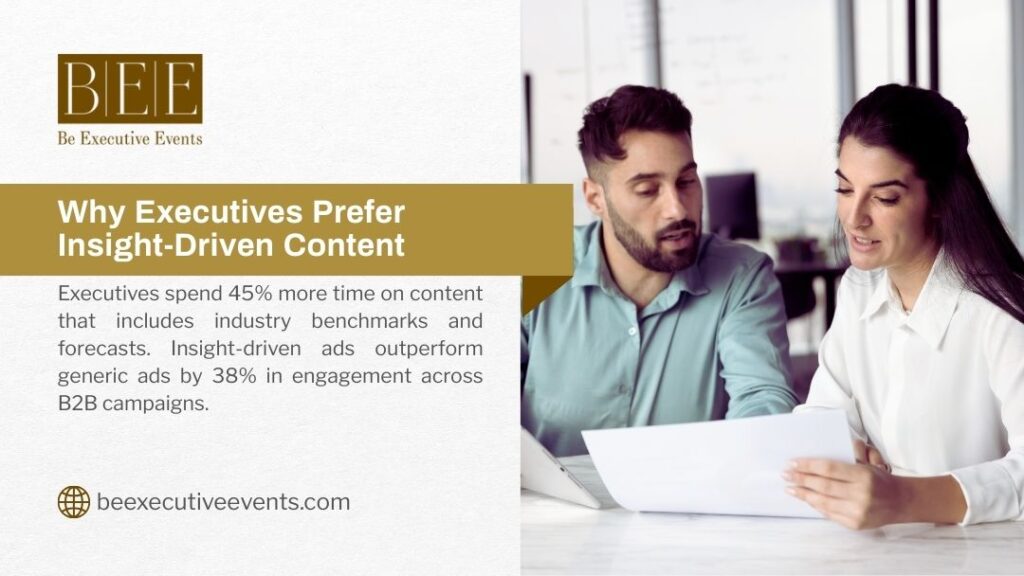
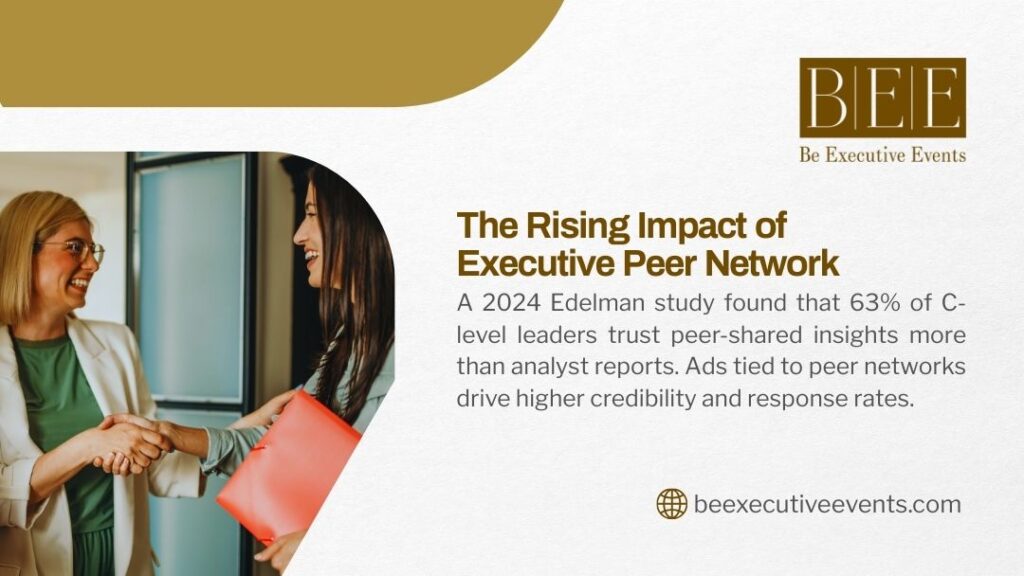
Executives trust their peers above all other sources. When developing your advertising strategy, prioritize channels that facilitate peer-to-peer sharing.
This means creating content worth forwarding. Research reports, industry benchmarks, and exclusive data become currency in executive circles.
We’ve seen single research studies generate more executive engagement than months of traditional advertising. Quality trumps quantity when targeting this audience.
Multi-Channel Orchestration
Successful campaigns layer multiple touchpoints strategically. An executive might ignore your LinkedIn ad but engage when they see your company mentioned in their industry newsletter the same week.
Effective Channel Mix:
- Primary: LinkedIn + Executive Events
- Secondary: Email + Industry Publications
- Support: Podcasts + Webinars
- Amplification: Peer referrals + PR
Digital Marketing for Enterprise Leaders
Beyond Traditional Digital Advertising
How to advertise to high-level business executives requires thinking beyond standard digital tactics. Programmatic display ads and Facebook campaigns won’t reach the boardroom.
Instead, focus on high-value content partnerships and exclusive access opportunities. Sponsor executive briefings, fund industry research, or create invitation-only virtual roundtables.
Structuring the right event sponsorship packages is key here, the best ones go beyond logo placement to give sponsors direct access to the decision-makers they’re trying to reach.
These approaches cost more per touch but deliver exponentially higher value. One meaningful conversation with a Fortune 500 CEO outweighs 10,000 banner impressions.
Measurement That Matters
Forget vanity metrics like impressions and clicks. Executive campaigns need sophisticated attribution models tracking pipeline influence and revenue impact.
| Metric Type | What to Track | Why It Matters |
| Engagement Quality | Time spent, content depth | Shows genuine interest |
| Account Penetration | Stakeholders reached | Indicates deal potential |
| Pipeline Velocity | Deal progression speed | Measures real impact |
| Revenue Attribution | Closed-won influence | Proves ROI |
Executive Audience Targeting Strategies
The Data-Driven Approach
Modern targeting combines first-party intent data with third-party verification. This means tracking which executives visit your website, then expanding reach to similar profiles.
Tools like 6sense and Demandbase reveal buying committees forming within target accounts. When three executives from the same company research your solution, that signals opportunity.
Layer this intelligence with LinkedIn’s targeting capabilities for precision campaigns. You’re not guessing who to reach – you’re responding to actual buying signals.
Content That Commands Attention
Executives won’t read your product brochure. They want insights that challenge their thinking and solutions to problems keeping them awake at night.
Create content addressing board-level concerns: digital transformation, market disruption, talent retention, and growth strategies. Position your solution within these broader narratives.
The Future of Executive Advertising
For brands serious about growth, knowing where to advertise to reach C-level executives will become even more personalized and value-driven. Generic messaging and broad targeting are going to continue declining in effectiveness.
Companies that win will combine digital precision with human connection. They’ll use data to identify the right executives, then engage them through meaningful experiences rather than interruptive ads.
Partnering With Experts Who Understand Executive Engagement
Successfully reaching C-level executives requires more than just picking the right advertising channels. It demands a deep understanding of executive psychology, business priorities, and decision-making processes.
At Be Executive Events, we’ve spent over a decade perfecting the art of executive engagement. We design targeted campaigns that put your message in front of the right leaders at the right moment.
Our approach combines strategic advertising with curated executive experiences. We don’t just help you reach executives – we create environments where meaningful business relationships develop naturally.
Want to connect with C-level decision makers who matter to your business? Contact our team to explore how targeted executive events and strategic partnerships can transform your market presence.
Frequently Asked Questions
What is the most cost-effective way to advertise to C-level executives?
LinkedIn remains the most cost-effective digital channel, with CPCs of $8-15 delivering verified executive reach. However, executive events often provide better ROI despite higher upfront costs, as one quality conversation can lead to million-dollar deals.
How much should I budget for executive-level advertising campaigns?
Plan $10,000-50,000 monthly for comprehensive executive campaigns. This covers LinkedIn advertising ($3-5K), sponsored content ($5-10K), event sponsorship ($10-30K), and content creation. Smaller budgets should focus on one channel done well rather than spreading thin.
Which social media platforms do C-level executives actually use?
LinkedIn dominates with 91% of executives using it daily for business. Twitter/X follows at 45% for news consumption. Facebook and Instagram see minimal executive engagement for B2B purposes. Focus your social efforts where executives actually spend professional time.
How can I measure ROI from executive advertising campaigns?
Track pipeline influence rather than lead volume. Monitor which accounts engage with your campaigns, then measure deal velocity and close rates from those accounts. Executive campaigns typically show ROI through 2-3 large deals rather than volume metrics.
What mistakes should I avoid when advertising to executives?
Avoid generic messaging, excessive frequency, and interruption-based tactics. Don’t treat executives like regular consumers or focus on features over business outcomes. Never buy questionable email lists or use aggressive retargeting that damages your brand perception.