
CEOs receive over 120 emails per day. Their assistants screen calls, they ignore most LinkedIn connection requests and yet some people consistently get meetings with top executives while others never break through.
This guide shows you how to get a meeting with a CEO through methods that respect their time and provide genuine value. You’ll learn which channels work, what messages get responses, and how to avoid the mistakes that get you ignored.
Why Standard Outreach Fails With CEOs
Research from Mailforge, shows C-level executives respond 23% more often than non-C-suite employees, with response rates of 6.4% compared to 5.2%. CEOs are actually more responsive than mid-level managers when you approach them correctly.
Most people fail to get meetings with executives because they use tactics designed for mid-level employees. The same email template that works with a product manager bombs with a CEO.
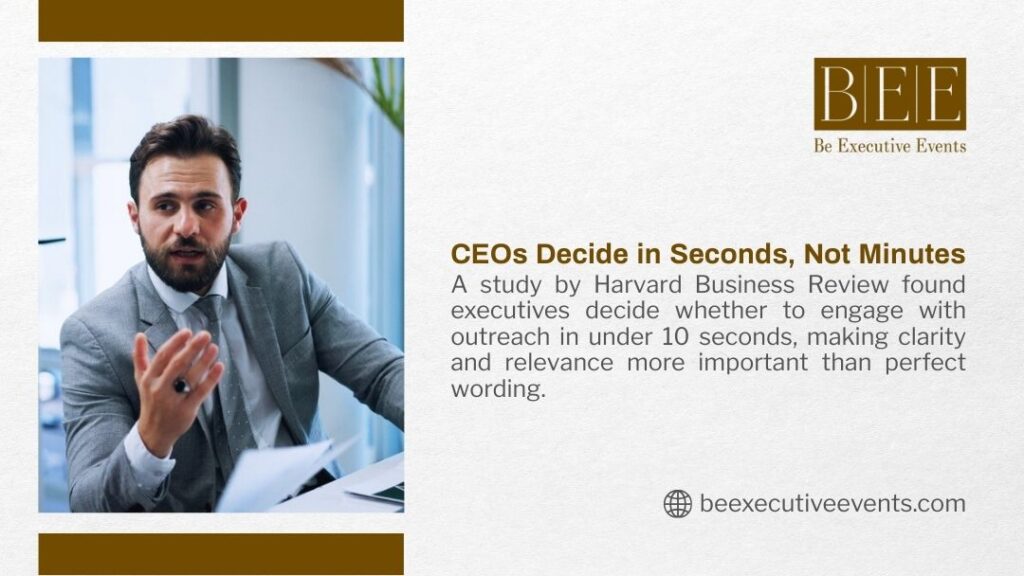
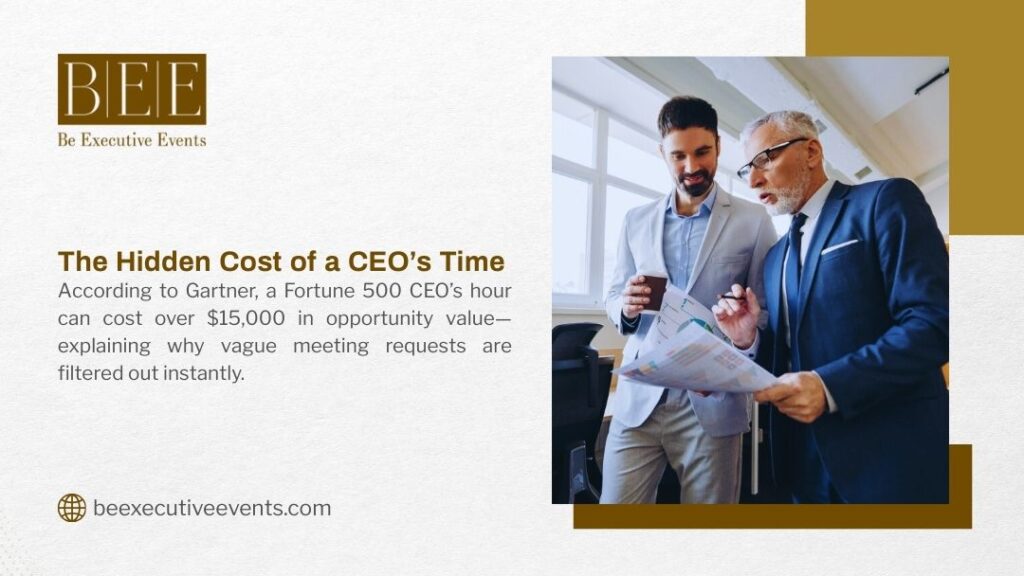
CEOs operate under different constraints. Their time costs thousands per hour. Every meeting must deliver clear value. Generic sales pitches waste that time, and assistants block them ruthlessly.
The data reveals what works. CEOs have a response rate of 5.9%, while CFOs reply to 6.4% of emails. But these numbers only apply to well-crafted outreach. Poor execution drops response rates close to zero.
| Approach Type | Response Rate | Why It Fails or Succeeds |
| Generic cold email | 0.5-1% | No personalization, obvious mass send |
| LinkedIn connection with pitch | 2-3% | Instantly recognized as sales tactic |
| Referral from trusted contact | 25-40% | Removes risk, saves screening time |
| Value-first email (research, insight) | 8-12% | Demonstrates respect and relevance |
| Direct phone call (cold) | 1-2% | Gets blocked by gatekeepers |
| Event introduction | 15-30% | Natural setting, peer validation |
Traditional cold outreach assumes CEOs have time to evaluate unknown vendors. They don’t. Your message must immediately answer: “Why should I care?” Most fail this test.
Understanding how to get meeting with executives isn’t about sending more messages, but it’s about using the right channels, timing, and value signals that senior leaders actually respond to.
What CEOs Actually Respond To
CEOs don’t ignore all outreach. They respond to messages that help them solve problems, spot opportunities, or connect with valuable contacts. From our experience working with executive-level professionals, the pattern is clear.
CEOs engage when you demonstrate three things: relevance to their current priorities, proof you understand their business, and respect for their constraints.
- Messages That Get Opened
Subject lines determine whether your email ever gets read. CEO inboxes overflow with messages. Your subject must stand out without looking like spam.
Specific beats generic every time. “Q4 treasury optimization data for [Company]” outperforms “Quick question” by massive margins. Name recognition helps. References to mutual contacts or recent company news signal you’ve done research.
Numbers grab attention. “3 CFO insights from your sector” works better than “Insights for your team.” Executives scan for quantifiable value in microseconds.
- Content That Gets Responses
The first sentence determines whether CEOs keep reading. Skip introductions about yourself. Lead with value or a specific observation about their business.
CEOs who respond to timeline-focused emails are further along in the evaluation process, thinking about implementation rather than just exploring options. Frame your outreach around future opportunities, not past problems they already know about.
Keep it short. Cold emails from 50 to 125 words tend to receive reply rates of approximately 50%, while lengthy emails get ignored. Say what you need in four sentences maximum. Prove you can communicate efficiently.
| Email Element | What Works | What Fails |
| Subject Line | Specific, with numbers or names | Vague, generic questions |
| Opening Line | Relevant insight or mutual connection | Introduction about yourself |
| Body Length | 50-125 words total | 200+ words with multiple paragraphs |
| Value Statement | Specific benefit tied to their priorities | Generic claims about your service |
| Call-to-Action | Specific day/time offer | “Do you have time to chat?” |
Your ask matters as much as your message. Don’t request “30 minutes to discuss.” Offer something concrete: “15 minutes on Thursday at 2 PM to share the competitor analysis.” Specific requests get specific responses.
The Five Channels That Actually Reach CEOs
Different channels work for different objectives. Email gets you on their radar. Events create real relationships. Alternatives to cold outreach for executives include multiple touchpoints that build credibility over time.
1. Warm Referrals Convert 10x Better
Personal introductions from trusted contacts outperform every other method. When someone a CEO respects makes an introduction, you bypass all the normal screening.
Look at your existing network first. Who do you know that also knows your target CEO? Former colleagues, investors, board members, industry peers all create potential bridges.
The key is making it easy for your connection. Provide a short, forwardable message. Be specific about why you want to meet and what value you offer. Don’t make your contact figure out how to position you.
- Find mutual connections through LinkedIn, investors, or industry groups
- Request the introduction with a clear, concise reason that benefits both parties
- Provide a pre-written blurb your contact can forward directly
- Follow up quickly when the introduction is made
- Thank both parties and report back on outcomes
From what Be Executive Events has seen across hundreds of executive interactions, warm introductions consistently produce the highest meeting conversion rates. CEOs trust their network’s judgment more than any marketing message.
2. Executive Events Create Natural Access
In-person events remain one of the most effective ways on how to get meetings with C-level executives regularly. When CEOs attend industry events, roundtables, or VIP gatherings, they’re there specifically to network and learn.
The format matters as much as attendance. Small, curated events work better than large conferences. A 20-person roundtable gives you actual conversation time. A 500-person summit provides brief hello exchanges at best.
Be Executive Events specializes in these high-value gatherings because they create the conditions for genuine relationship development. Executives attend with open minds, ready for strategic conversations that wouldn’t happen through cold outreach.
- Identify events where your target CEOs actually attend (check speaker lists, past attendee photos)
- Participate meaningfully in sessions rather than lurking on the sidelines
- Prepare specific conversation topics tied to event themes
- Follow up within 48 hours while the connection is fresh
- Reference specific discussion points from your conversation
Event relationships compound over time. The CEO you meet at one event becomes easier to reach for the next conversation. The Executive networking builds relationship capital that opens doors cold outreach cannot.
3. LinkedIn Works When You Build Credibility First
LinkedIn fails when people treat it like a cold calling tool. It succeeds when you use it to build visibility and establish expertise before making direct contact.
LinkedIn achieves 10.3% reply rates compared to email’s 5.1% average. But this only works with the right approach. Share insights about industry trends, comment thoughtfully on relevant posts, publish content that demonstrates expertise.
The goal is recognition before contact. When you finally send a connection request, the CEO has seen your name multiple times. You’re not a random stranger. You’re someone who adds value to conversations.
- Post 2-3 times weekly with genuine insights, not thinly disguised sales content
- Comment on CEO posts with substantive additions to the discussion
- Share research, data, or analysis relevant to their industry
- Build a following before reaching out directly
- Reference specific content when you do make contact
Connection requests need context. Don’t send generic invites with instant pitches. Reference a specific post they made or mutual interest. Make the connection feel natural, not transactional.
4. Value-First Email Gets Past Gatekeepers
Email still works for how to reach a CEO directly when you lead with value instead of requests. Share relevant research, industry insights, or specific observations about their business before asking for anything.
Financial Services CEOs show 5.73% reply rates when approached with value-first messaging. The key is genuine value, not thinly disguised sales pitches dressed up as insights.
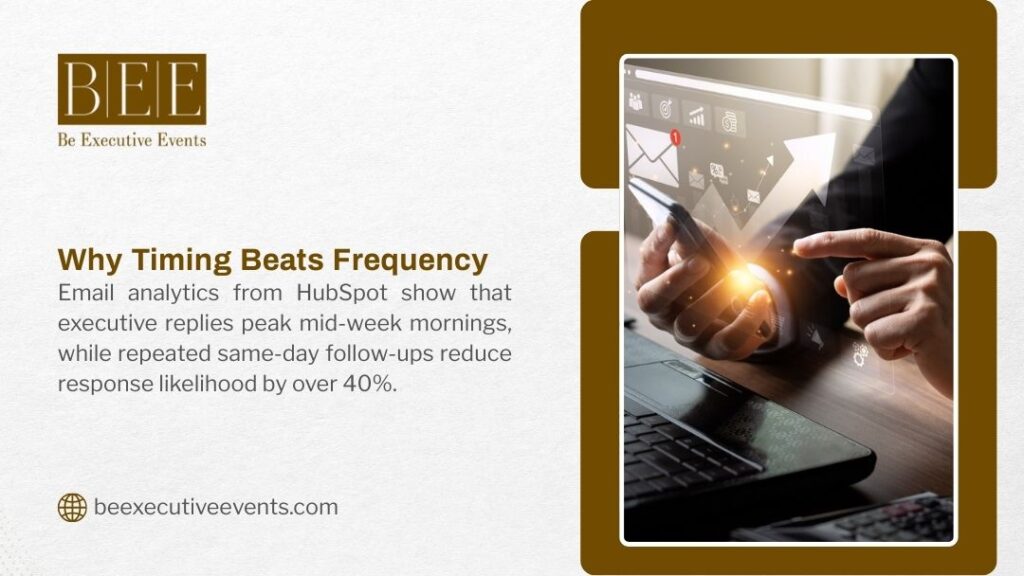
Send your email Tuesday through Thursday morning between 8-10 AM. Wednesday mornings generate approximately 5.8% response rates, the highest of any day.
CEOs check email early before meetings consume their schedule.
5. Multi-Channel Sequences Build Momentum
Single touchpoints rarely succeed with busy executives. Following up can increase reply rates by 50% or more when done professionally with new information in each message.
The pattern that works: Send a value-focused email, wait 3-4 days, follow up on LinkedIn with a new insight, wait a week, try a phone call about a specific topic, wait two weeks, send relevant content with no ask.
Each touchpoint should add new value. Don’t just repeat “checking in” or “following up on my previous message.” Executives ignore repeated messages that say nothing new.
| Touchpoint | Timing | Content Type | Purpose |
| Initial email | Day 1 | Insight or research | Plant seed, demonstrate value |
| LinkedIn message | Day 4-5 | New angle on same topic | Different channel, fresh perspective |
| Phone attempt | Day 10-12 | Specific question or update | Show persistence, add urgency |
| Content share | Day 24-26 | Report, article, or data | Stay visible, no hard ask |
| Event invitation | Day 35-40 | Relevant gathering | Natural meeting opportunity |
Space your outreach. Three touches in three days looks desperate. Three touches over three weeks shows thoughtful persistence. The best way to approach a CEO professionally combines patience with consistent value delivery.
Common Mistakes That Kill Your Chances
Even well-intentioned outreach fails when it makes predictable errors. These mistakes signal you don’t understand how CEOs operate, and they destroy your credibility instantly.
The biggest error is leading with what you want instead of what you offer. CEOs don’t care about your company, your product, or your goals. They care about their priorities. Messages that start with “I’d love to discuss” or “We help companies like yours” get deleted immediately.
Another common failure is the lack of research. Generic messages that could apply to any company show you haven’t invested time. CEOs notice when outreach demonstrates zero knowledge of their business. It signals you’re blasting everyone, not targeting them specifically.
If your outreach keeps hitting dead ends, it’s worth understanding why executives ignore sales outreach in the first place, the patterns behind their filtering decisions reveal exactly what to fix.
- Don’t send the same message to multiple executives at one company
- Don’t pitch on the first contact (build rapport first)
- Don’t use buzzwords and corporate jargon (be direct and clear)
- Don’t ignore gatekeepers (executive assistants control access)
- Don’t give up after one attempt (persistence with value works)
Length kills response rates. Sales emails average only 15-25% open rates, and if you can’t make your point in 100 words, you’re wasting their time. Edit ruthlessly before sending.
Timing matters more than most people realize. Friday afternoon emails get buried. Monday morning messages compete with the weekend backlog. Tuesday and Wednesday mid-morning hit when CEOs are most engaged and decision-ready.
Build Executive Relationships Through Strategic Engagement
Be Executive Events has spent more than 10 years creating environments where C-level leaders connect naturally through curated experiences.
Our global programs bring together CEOs, CFOs, and other senior decision-makers for focused discussions on strategic topics that matter to their businesses.
These gatherings work because they respect executive time constraints while delivering genuine value. Participants don’t just attend an event. They join ongoing conversations with peers facing similar challenges across North America, Europe, and Asia.
When you understand how to reach decision makers in B2B markets, you realize the best opportunities come from shared experiences rather than cold outreach. The relationships formed in these settings create access that traditional marketing cannot replicate.
Contact Be Executive Events to learn how participation in our executive programs can accelerate your access to senior decision-makers and create relationships that drive business results.
Final Thoughts on Getting CEO Meetings
How to get a meeting with a CEO comes down to respect, relevance, and persistence. Respect their time with concise messages. Prove relevance through research and specific insights. Show persistence through multiple value-adds over time, not repeated asks.
Start with the channels where you have advantages. Warm referrals from mutual contacts bypass all screening. Events create face-to-face time where relationships develop naturally. LinkedIn builds visibility before direct contact. Email works when you lead with value.
Track what works for your specific audience. CEO response patterns vary by industry, geography, and current business conditions. Test approaches, measure results, and double down on what generates meetings.
The executives you want to reach are accessible. They just require approaches that demonstrate you’re worth their limited time. Show that through every touchpoint, and CEO meetings become routine rather than rare.
Frequently Asked Questions About How to Get a Meeting With a CEO
What’s the best way to reach out to a CEO for a meeting?
Warm referrals from mutual contacts work best, with 25-40% success rates. If you lack referrals, lead with specific value in a short email (50-125 words) that demonstrates research about their business.
How do I get past executive gatekeepers to reach a CEO?
Executive assistants protect CEO time from low-value requests. Build credibility through thought leadership to attract executives, participate in industry events where they see your name, or get referrals from trusted contacts.
How many times should I follow up with a CEO who doesn’t respond?
Three to five touchpoints over 4-6 weeks is appropriate, with each adding new value. First follow-ups boost response rates by 50%+. Space attempts 5-7 days apart. If you get no response after five quality attempts, move on or try a different channel like LinkedIn or events.
What time and day should I email a CEO?
Wednesday mornings between 8-10 AM generate the highest response rates at approximately 5.8%. Tuesday and Thursday mornings also perform well. Avoid Monday mornings (weekend backlog), Friday afternoons (checking out), and weekends (sub-1% response rates).