
Market Development Funds are the most flexible budget a partner marketing lead controls, and the easiest to forfeit. MDF buys an approved activity, and the vendor funding it is buying audience quality, not impressions. Executive events are where that distinction pays.
If you are learning how to use MDF for events, the key is to treat the allocation as funding for a specific, approved audience and outcome, not as a general event budget.
What MDF Is in a Partner Program
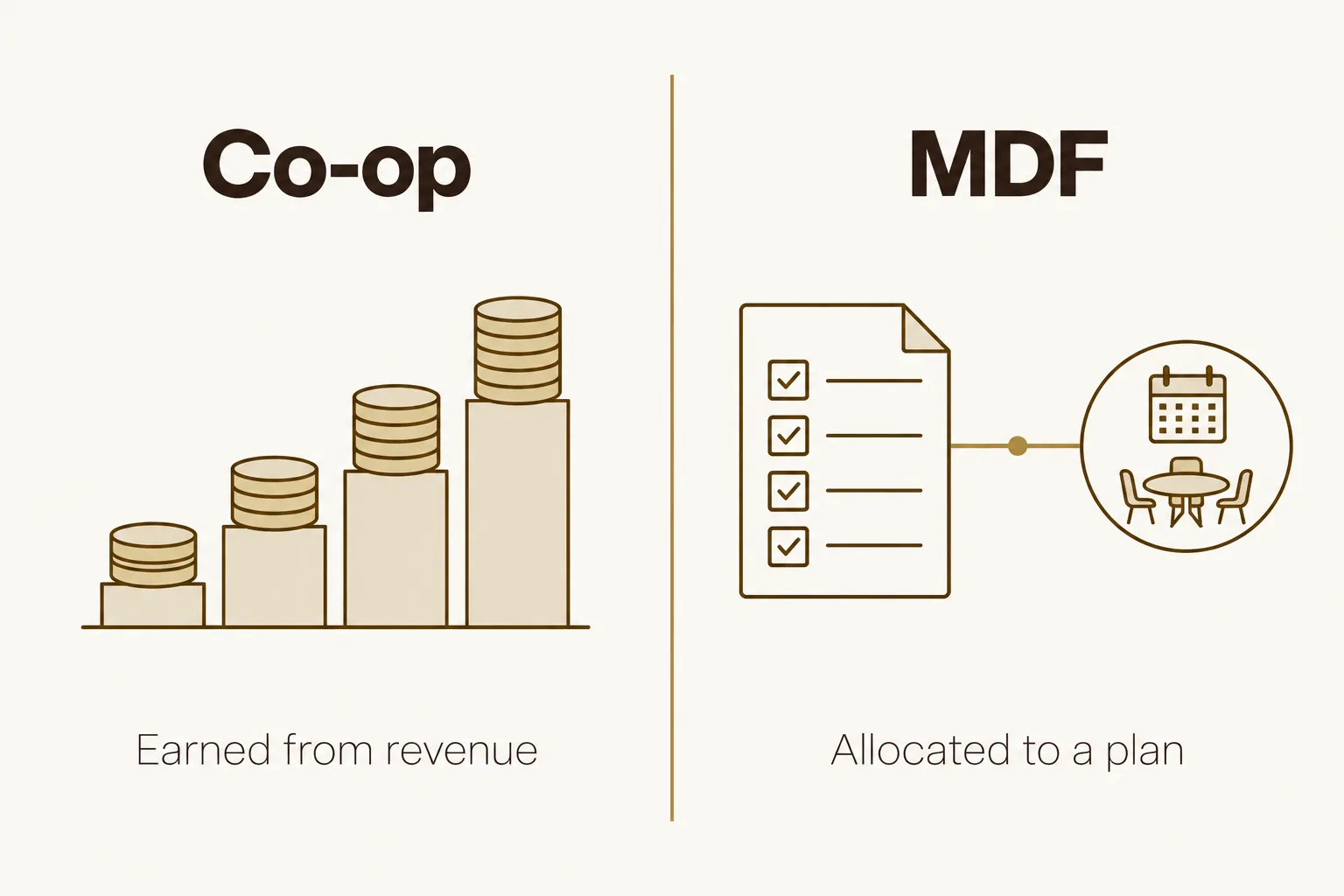
MDF is vendor-allocated budget given to channel and alliance partners to run demand generation that promotes the vendor’s solutions. It is earmarked, not free cash: spend must map to approved activity categories, and events are among the most commonly eligible. Day to day it sits with partner marketing managers, channel marketing leads, alliance managers and field marketing leads.
MDF vs Co-Op Funds: Why the Difference Changes Your Event Plan
Co-op funds are partner-earned, accumulating as a defined revenue percentage is attained with the vendor, as this explanation of how co-op accrual differs from discretionary MDF sets out. MDF is allocated proactively against a plan. The consequence for event planning: co-op skews reimbursement-driven, while MDF rewards a specific named audience and agenda submitted before anything is contracted.
Why Search Results for “MDF” Mix in Databases and File Formats
Two unrelated meanings crowd the term. In SQL Server, .mdf is the recommended extension for a database’s primary data file, per Microsoft’s reference on database files and filegroups. The ASAM Measurement Data Format standard is a binary format for storing recorded or calculated data for later processing. Neither relates to partner funding, which is the meaning used from here on.
Why Executive Events Are a High-Leverage Use of MDF
Vendors approve activity that reaches the buying committee. Executive roundtables, CxO dinners and branded virtual events put executive decision makers (CEO, CIO, CTO, CFO, CHRO, CDO, CPO, CAIO, plus VPs and Directors leading transformation, cybersecurity, cloud, data and AI) in the same room as the partner and the vendor.
Ad flights and broad webinars produce reach without named accounts. A curated room of twelve produces a claim-friendly record: attendees by title and company, discussion themes, follow-up actions.
The pattern works hardest in Technology and SaaS, BFSI, Healthcare and Life Sciences, Manufacturing and Supply Chain, Energy and Utilities, Telecoms, Retail and E-commerce, and Professional Services.
Step 1: Build an MDF Strategy Before You Request a Cent
The first step in how to use MDF for events is connecting the vendor’s priorities to a defined audience, format and measurable outcome before requesting the funds.
| MDF planning element | What to define | Why it matters |
|---|---|---|
| Vendor campaign theme | The current vendor priority, such as AI adoption, cloud migration or cybersecurity | Keeps the activity aligned with the vendor’s go-to-market priorities |
| Target accounts | Named companies and the executive profiles you want to reach | Gives the MDF request a specific audience instead of a broad reach goal |
| Event format | Virtual session, executive dinner, roundtable, audience acquisition or summit | Determines how the budget will be used and what execution is required |
| Success metrics | Senior attendees, target accounts represented, meetings generated and influenced pipeline | Gives the approver clear outcomes to evaluate |
| Timing | Funding period, vendor fiscal quarter and executive availability | Helps avoid spending the allocation during weak attendance periods |
An MDF strategy is a documented plan matching the vendor’s go-to-market priorities to specific accounts, regions, formats and metrics for one funding period. Build it in this order:
- Start from the vendor’s live campaign themes (cloud migration, AI adoption, cybersecurity posture, data platform consolidation) and pick the one your target executives care about.
- Define the target account list and executive profile first. Choose the format second, never the reverse.
- Set metrics the approver recognizes: pre-approved senior attendees, target accounts represented, meetings generated, influenced pipeline.
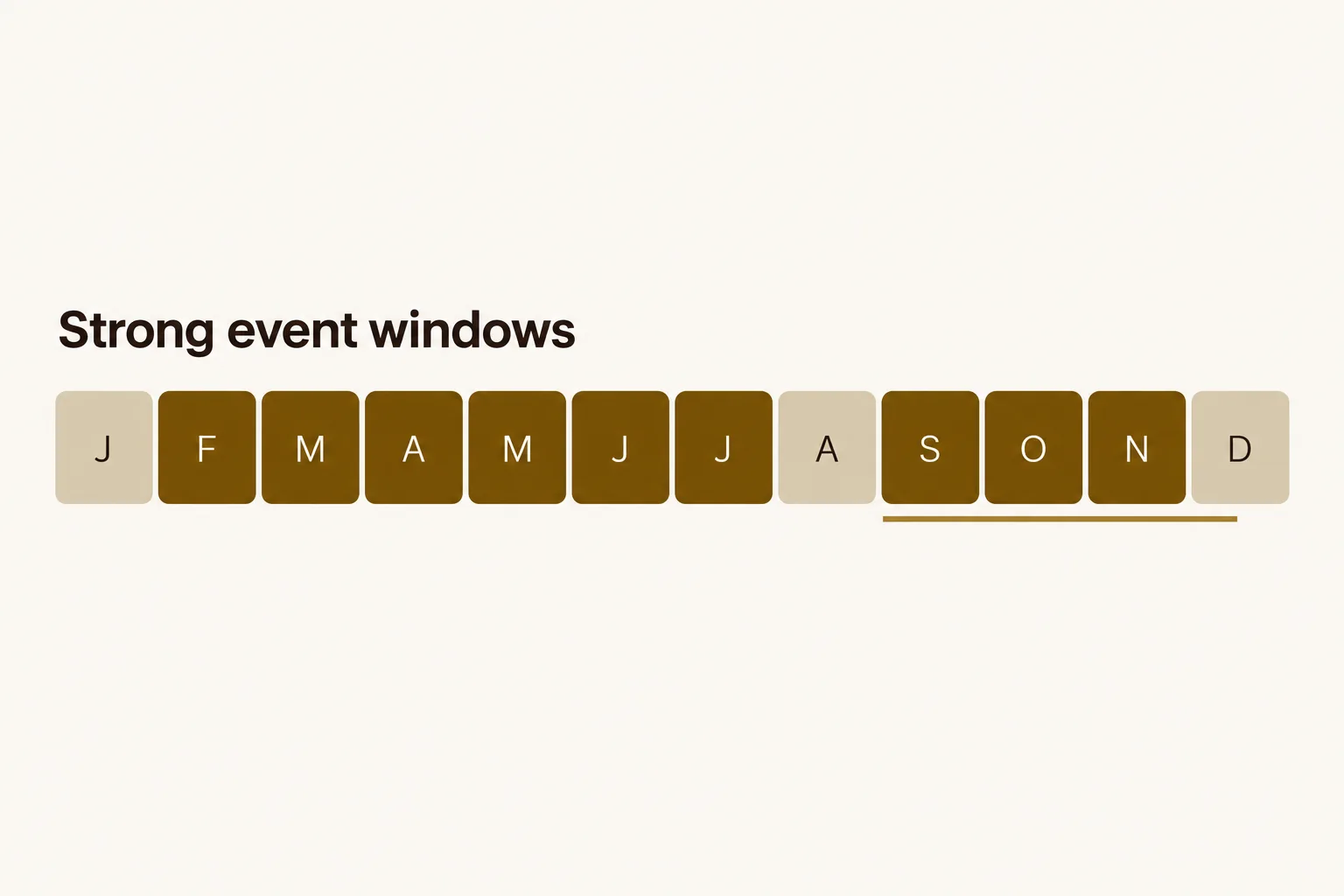
- Time the request to the vendor’s fiscal quarters and to executive availability. Late February to July and September to early December are the strong windows; August and the late-December shutdown are not, particularly across UKI, DACH and BENELUX.
Step 2: Create and Submit the MDF Request
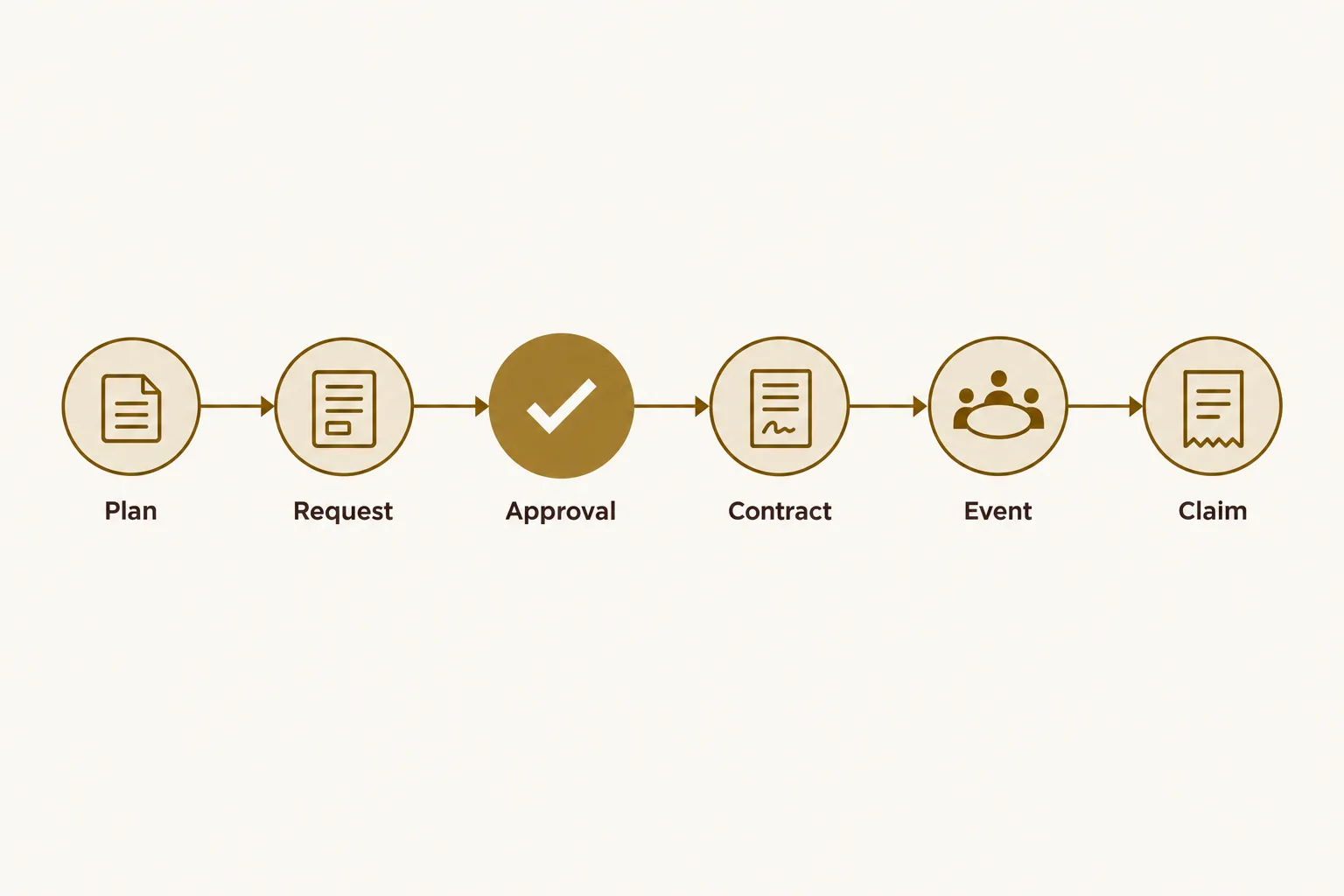
Creating an MDF request means submitting a funding request through the vendor’s partner portal or MDF tool, tied to a single activity. Prepare: activity type and date, region, target audience profile and headcount, vendor solutions promoted, itemized budget, expected outcomes, and branding plan.
Submit before the activity start date and before contracting venues, moderators or suppliers. One vendor’s rule that unapproved claims are rejected outright is typical: a reimbursement not pre-approved in writing will not be paid.
Attach the agenda and moderator plan rather than a bare line item, because approvers fund credible execution. Co-funding with your own budget or a co-sponsor turns a modest allocation into a stronger format.
Step 3: Match the Format to the Approved Budget
Understanding how to use MDF for events also means choosing a format that makes sense for the size of the allocation and the accounts you need to reach.
- Virtual executive events and webinars. No venue or travel cost, fundable across several regions from one allocation. Strongest fit for a first activity.
- Executive dinners and roundtables. Roughly 6 to 26 executives, highest intimacy and follow-up rate. Needs venue research, a moderator and real agenda design.
- Audience acquisition or registration campaigns. The right line item when you already own the event but cannot fill it at the right seniority.
- Summits and multi-region series. Legitimate, but usually later, once a funded activity has proven the model.
An allocation that funds one premium dinner may instead fund a multi-region virtual series. Decide based on which option gets you in front of the named accounts.
Step 4: Execute So the Room Matches the Proposal
Audience acquisition is where MDF-funded events fail. Invite only pre-approved profiles, screen every registration against the agreed title and company criteria, and replace no-shows from a reserve list.
Outreach across UKI, DACH, BENELUX and the wider EU runs on email, LinkedIn and trusted B2B data providers, and it must stay lawful, fair and transparent while respecting each contact’s right to stop their data being used for direct marketing, as the ICO’s rules on business-to-business direct marketing set out.
Design the content as a moderated peer discussion built on two or three sharp questions, not a pitch deck. That is what senior attendees turn up for, and it produces the insight the vendor wants reported back.
Regional nuance matters: DACH executives expect precise, substance-led agendas; UKI and BENELUX respond to peer-group framing; and NAMER Q4 stays active into early December. Capture evidence as you go: attendance data, final agenda, photography or platform recordings, engagement notes.
Step 5: Claim the Funds with Clean Proof of Performance
Related readingHow to market to C-Level Executives in Marketing – 5 StrategiesRead the guide →| Proof of performance | What to provide | What it demonstrates |
|---|---|---|
| Supplier invoices | Paid, itemized invoices from approved suppliers | Shows where the MDF allocation was spent |
| Agenda | Final event agenda and discussion topics | Confirms what activity was actually delivered |
| Attendee list | Attendee names, titles and companies | Proves the event reached the approved executive audience |
| Branding evidence | Invitations, holding slides, platform screenshots or event materials | Shows the vendor received the agreed visibility |
| Results summary | Qualified attendees, target accounts, meetings and next steps | Connects the spend to the outcomes reported to the vendor |
Completed activities are submitted with documentation as proof of performance, and a well-run program states exactly which documents it requires, a point stressed in this checklist of MDF proof-of-performance requirements.
Assemble paid itemized supplier invoices, the agenda, the attendee list with titles and companies, branding evidence (invitation, holding slides, platform screenshots) and a results summary.
Check your claim window and submit inside it; late claims are a common route to forfeited funds. Report in the vendor’s language: qualified senior attendees, target accounts engaged, follow-up meetings booked, next steps per account. Repurposing the discussion into on-demand content often qualifies as its own activity next cycle.
Where MDF-Funded Events Go Wrong
- Booking a venue or supplier before approval lands.
- Filling seats with whoever accepts, then failing the seniority criteria at claim time.
- No attendance evidence, no branding evidence, no itemized invoices.
- An agenda that drifts into a product pitch, so nobody engages and there are no meetings to report.
- Scheduling into August or late December, then blaming the format for attendance.
- Treating the post-event report as admin rather than as the argument for next period’s allocation.
Frequently asked questions
What is MDF strategy?
How do I create an MDF request?
What does MDF mean in data?
How can I open an MDF file?
Can MDF cover virtual executive events?
Can MDF pay a third party to run the event?
Turning an Approved MDF Allocation into an Executive Room
Approved funds are only as good as the seniority of the room they buy. If you hold an allocation and a window to hit, the sensible first activity is a virtual executive session, a single curated roundtable or dinner, or audience acquisition support for an event you already run.