One of the primary reasons leaders attend executive events is for networking. It’s also one of the biggest reasons events fail to deliver.
Format is key
Networking is often seen as something separate to the content, an add-on if you will. But facilitate networking by throwing people into a room together and expecting things will ‘work themselves out.’ Instead, meaningful connections between executives are governed by psychology, environment and format. Despite predictions that email would die, it remains the primary channel for how executives consume professional content.
From one-on-one conversations to large group activities, the format of every event shapes movement around a space. But more importantly, it dictates how comfortable people feel opening up, sharing their thoughts and building relationships that extend beyond the event itself.
Executive networking is built on trust, credibility and relevance. It is not about collecting business cards and filling a notebook with new contacts. Senior leaders are busy. They tend to participate in activities where there is value, where they feel their status, time and intentions are understood.
Making It Meaningful
So how do you encourage executives to connect? Format is everything.
But format alone isn’t enough, knowing how to create executive events with great outcomes means aligning every element, from guest list to discussion flow, around a clear strategic purpose.
Yes, large open networking sessions can be fun and a great way to meet new people, however these types of activities typically breed small talk conversations. If deep connections are made in these scenarios, they are the exception.
Smaller, Curated Spaces
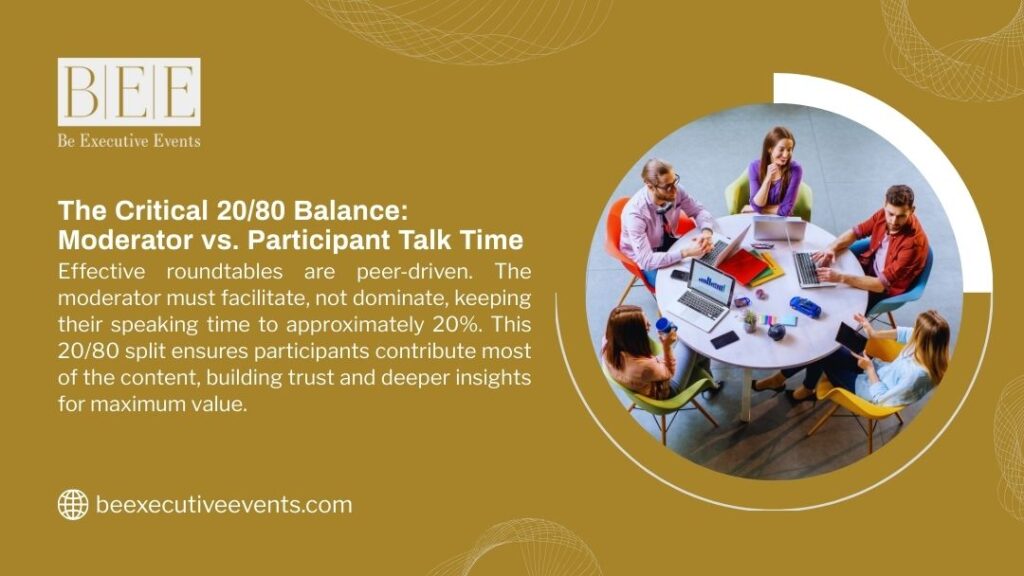
A more effective approach is to create smaller, curated spaces that allow discussion to flow naturally. Roundtables, hosted conversations, facilitated peer groups and invitation-only sessions allow people to tap into one of the fundamental human psychological needs; we open up when we feel like we are part of a group.
Environment
The environment you create plays a large role in behaviour. Where people are seated, how they enter the room, lighting, acoustics and even how attendees are introduced to one another can make or break someone’s confidence. The more inviting and performance oriented the setup, the more likely people are to engage with their surroundings and each other.
Next is relevance
When executives walk into a room and feel the attendee list matches their responsibility level, challenges and aspirations, they are more likely to stick around and open up. That starts well before the event, knowing how to identify executive decision-makers ensures the guest list delivers the relevance that makes executives want to engage.
Curated guest lists, themed content and facilitated introductions go a long way to encouraging quality conversations.
Psychologically speaking, relevance equals value, and we pay more attention to information we perceive as valuable. Lastly, if you leave networking to chance, you’re probably going to be disappointed. Some of the best networking experiences are facilitated by skilled moderators, focused discussions and brilliantly executed opportunities for conversation.
- Give people a reason to talk.
- Ask questions that promote discussion and insight.
- Create a safe space for sharing ideas and challenges.
Authentic Conversations
Before you know it, people will be having authentic conversations and forming authentic connections. At the highest level, networking doesn’t happen by accident. People don’t just magically bump into each other and leave best friends.
Networking at exclusive, executive events is carefully orchestrated. And how those events are formatted decides if people will merely attend or truly connect. Great formats meet executives where they are mentally.

Cultivating Long Term Relationships
Instead of counting how many people attend your event, try creating environments that drive influence, earn trust and cultivate long-term relationships.
Be Executive Events helps companies connect with senior decision makers through high-value environments where executives actively engage with strategic content. Need help mastering your format or creating networking experiences that actually work? Please ask us how we can help.