
The GA date is locked, the narrative is signed off, and someone has asked demand generation for “a launch event.” When the people who decide whether the product gets bought are a CIO, a CFO or a VP of Transformation, most launch-event advice works against you.
Stage lighting, a countdown reveal and a 300-name invite list are consumer mechanics. Senior decision-makers do not clear an evening to watch a demo reel. What follows are the formats, the planning sequence, the invitation mechanics and the timing that put executives in the room.
What an enterprise product launch event for executives is
A small, invitation-only gathering built around a commercial question your product answers, with the product itself occupying a minority of the agenda. It is defined by who sits in the room, not by what happens on stage.
That room is one tier of the buying committee: CEO, CIO, CTO, CFO, CHRO, CDO, CPO and CAIO, plus the senior VPs and Directors leading Transformation, Cloud, Cybersecurity, Data and AI programs. These are people who arrive with a budget line and a board commitment attached to the topic.
The purpose is validation, not announcement.
An executive accepts an invitation to test their own thinking against peers facing the same decision, to benchmark where they sit, and to hear what went wrong for someone who already deployed something similar. Your launch narrative earns its place by being the sharpest version of that question.
Enterprise cycles are long and committee-driven, so treat the event as a pipeline entry point rather than a closing moment. The realistic outcome is a set of informed senior relationships and a clear read on objections, not signatures.
Why executive launches follow different rules than standard launches
Executive time is the scarce currency. A CxO gives up two or three hours of a compressed week. Swag, entertainment and production value do not repay that. Peer access and candid benchmarking do.
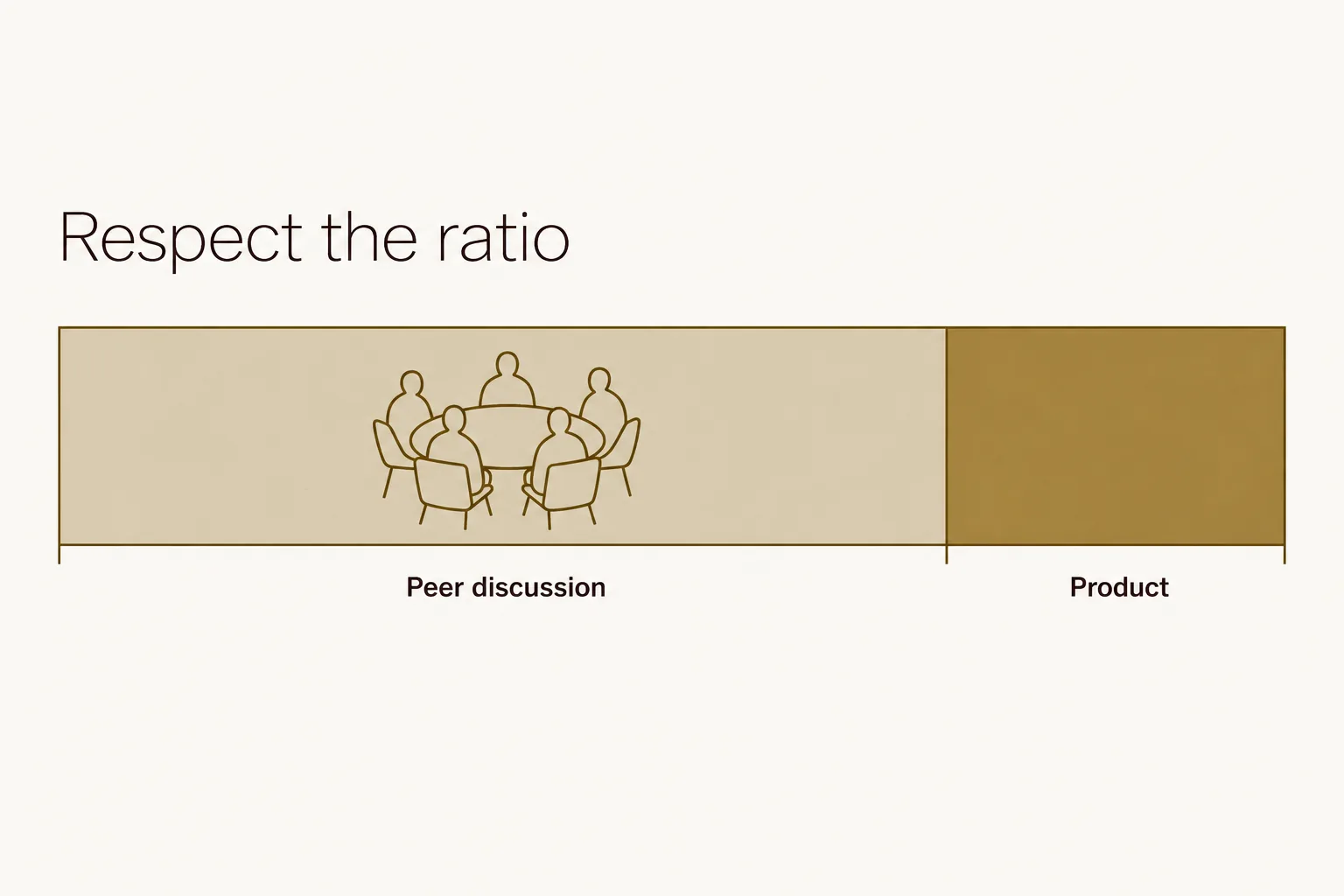
Respect the ratio. Most of the agenda is peer discussion; your product narrative is a clearly time-boxed minority. Invert that and a roundtable becomes a webinar with cutlery.
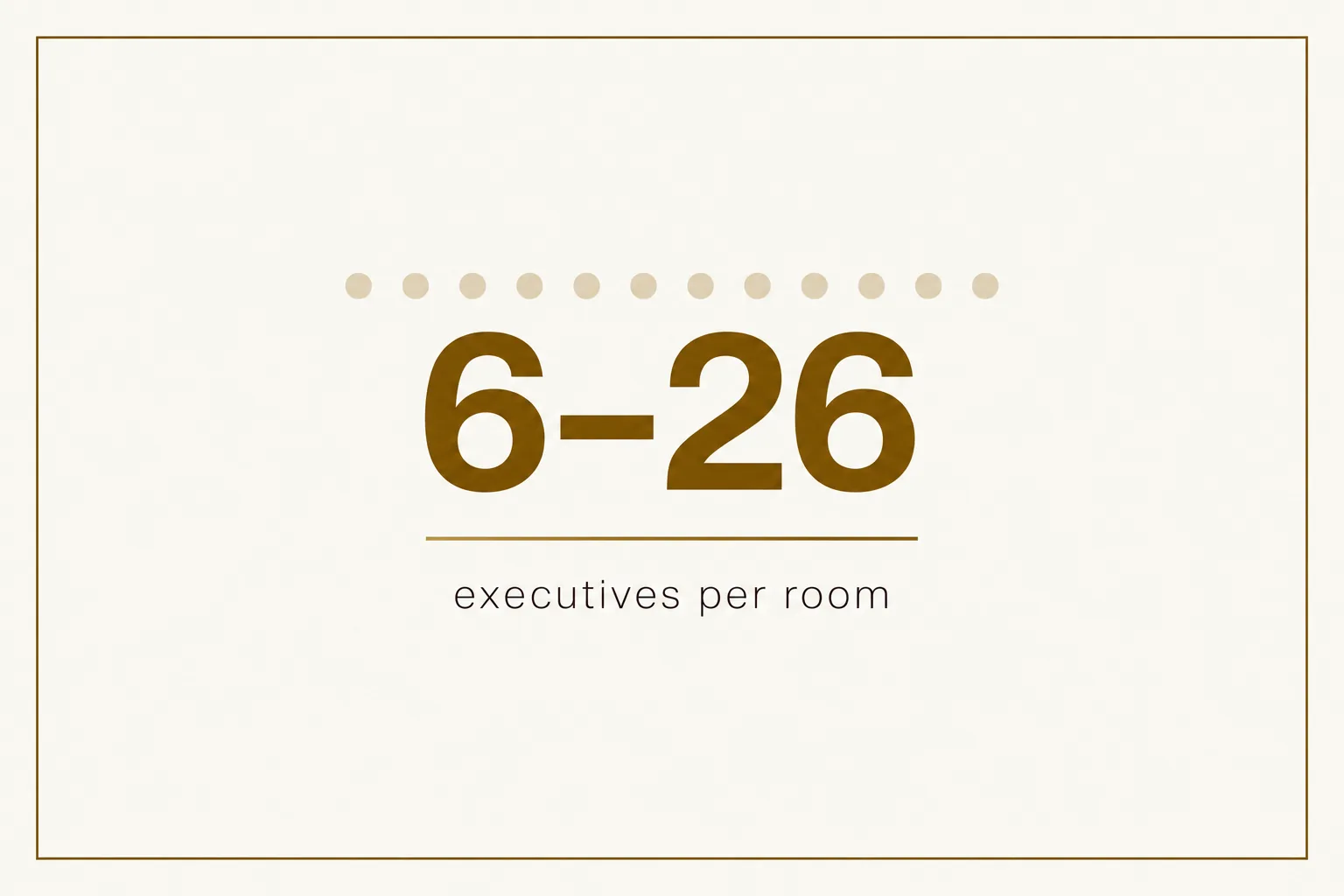
Small rooms outperform large ones. Six to 26 executives is the working band for dinners and executive roundtables. Below six, two cancellations stall the conversation; above roughly 26, the table fragments and the quiet attendees stop contributing. Scale belongs to virtual formats, not to the dinner table.
Reputation compounds across a program. A visible sales pitch damages the next three events far more than it helps this one. Executive circles in Frankfurt, Amsterdam and Manchester are small, and the question “was it worth it?” travels faster than any campaign.
Ground rules unlock candor. Running the discussion under the Chatham House Rule means participants are free to use the information they receive, but neither the identity nor the affiliation of any speaker or participant may be revealed. Stating that on the invitation is often what converts a maybe into a yes, because it lets a CISO or a CFO speak about a live program without press risk.
Formats that work for executive launch audiences
| Format | Best for | Typical size | Key advantage |
|---|---|---|---|
| Private executive briefing | Adoption within priority accounts | 6–12 | High-trust, account-specific discussion |
| Executive dinner | First contact and peer networking | 12–26 | Strong relationship-building environment |
| Executive roundtable | Pre-GA validation and objection gathering | 6–16 | Candid peer discussion |
| Virtual executive event | Regional reach and lower cost | 20+ | Scales across markets without travel |
| Regional roadshow | Multi-market launches | 10–26 per market | Localized audience and delivery |
| Customer showcase / lab | Proof and practical validation | 8–20 | Real deployment experience carries more weight |
When teams look for examples of product launch events, the consumer references (pop-ups, parties, influencer previews) are the wrong class entirely. These B2B formats hold up, each mapped to a launch objective.
Private executive briefing
Six to 12 executives from one industry vertical or account tier, under NDA where the roadmap warrants it. Best for accounts already in cycle, where the objective is adoption rather than awareness. Put product leadership in the room, not only sales: executives calibrate seriousness by who the vendor sends.
Executive dinner
Twelve to 26 CxOs around a facilitated table, with the launch narrative delivered as a discussion prompt between courses rather than a speech. Venue and seating plan are targeting instruments: who sits beside whom decides which conversations happen. The highest-trust format for first contact with cold target accounts, and the one that produces the most valuable executive networking for attendees themselves.
Executive roundtable
A moderated peer discussion built on three or four launch-adjacent problem statements. It runs equally well in person or virtual, and it is the strongest format for capturing objections before general availability, while you can still act on them. Use an independent moderator; a vendor-chaired session drifts toward demo inside 20 minutes, and the room notices.
Branded virtual event and executive webinar
A branded virtual event reaches decision-makers across UKI, DACH, BENELUX and NAMER in one session with no travel cost, which is why it is usually the first step for teams testing executive engagement. Hold it to 60 minutes, anchor it to a single time zone, and use cameras-on breakouts so the peer exchange survives the format. Cut a clean on-demand version for the invitees whose diaries moved.
Regional roadshow and multi-market series
The same launch narrative repeated across markets (London, Amsterdam, Frankfurt) with a locally curated audience in each. Local language, a local moderator and local peer references drive attendance in DACH and BENELUX in a way a centrally run English-language invitation does not. Pilot one market, expand once the format proves itself.
Customer showcase and hands-on lab
An existing customer executive describing a deployment, including the parts that went badly, carries more weight than any launch deck. Labs suit technical deputies; if you run one, pair it with a parallel CxO strategy track so both tiers leave with something a datasheet could not give them.
A ten-step plan for an executive product launch event
Related readingExecutive Events: Innovative Corporate Event SolutionsRead the guide →| Stage | Primary decision | What to measure or confirm |
|---|---|---|
| 1. Audience | Who qualifies? | Account, title, seniority, geography |
| 2. Objectives | What should the event produce? | Qualified attendance, meetings, influenced opportunities |
| 3. Format | Which event structure fits? | Awareness, validation, adoption |
| 4. Timeline | When should invitations open? | 6–8 weeks in person; 3–4 weeks virtual |
| 5. Agenda | How much product content? | Product segment remains a minority |
| 6. Speakers | Who gives the event credibility? | Moderator and peer speakers confirmed |
| 7. Acquisition | How will executives be reached? | Approved profiles and compliant outreach |
| 8. Confirmation | How will attendance be protected? | Confirmations, replacements, waitlist |
| 9. Execution | Who owns the room? | Run of show, seating, breakout ownership |
| 10. Follow-up | What happens afterward? | Insights, meetings and next steps within 72 hours |
1. Define the audience profile before anything else. Target accounts, titles, seniority band, geography, and the initiatives a qualifying attendee must own. Write it as an approval filter someone can apply to a named registrant, not as a persona slide.
2. Set measurable objectives. Qualified executive attendance against that profile, follow-up meetings accepted, opportunities influenced. Registration count is a vanity number here.
3. Choose the format from the objective. Awareness across regions points to virtual. Validation before GA points to a roundtable. Adoption inside named accounts points to a private briefing or a dinner.
4. Build the budget and work the timeline backwards. Open invitations six to eight weeks out for in-person, three to four weeks for virtual. Earlier and diaries are not set; later and they are full.
5. Design the agenda as a discussion. One product moment, placed after peer dialogue has warmed the room, never in the opening 15 minutes.
6. Secure the moderator and peer speakers before you promote. The names on the invitation drive the RSVPs. A credible independent moderator and two peer voices beat any creative treatment.
7. Run GDPR-compliant audience acquisition across email, LinkedIn and trusted B2B data providers, with every registrant vetted individually against the approved profile.
8. Confirm, then re-confirm. Executive diaries move. A confirmation cadence in the final fortnight plus a managed waitlist protects the room on the day.
9. Execute against a run of show. Briefed hosts, seating or breakout assignments, and a named owner for every table and every virtual room. This is where event production management earns its keep.
10. Report and follow up within 72 hours, with attendee-level insight and named next steps while the conversation is still live.
Inviting senior executives: what earns the yes
Best practice for inviting senior executives inverts the usual campaign logic. Lead with the peer group and the question, not the product name. “Eight CIOs from European manufacturers, on what broke in their first year of AI deployment” outperforms any launch headline.
Name the room explicitly: industry, seniority band, approximate size, who moderates. Executives are deciding whether the other chairs are worth their evening.
That is also what makes executives attend events: a relevant peer group, a useful discussion topic, and a clear reason to believe their time will be well spent.
For CEO, founder and owner audiences, a personalized invitation from one named sender beats a branded mass email, sequenced across channels (email, LinkedIn, and where appropriate the executive assistant) spaced over days rather than stacked into one week.
Vet every registrant and decline off-profile registrations, including the junior delegate sent as a substitute. One manager in a CxO roundtable changes what everyone else is willing to say. Pre-approval is the mechanism that turns a guest list into a guaranteed executive audience.
Keep the compliance guardrails visible. The UK regulator’s guidance on business-to-business marketing states that consent is not required under PECR for such messages to corporate subscribers, provided you do not disguise or conceal your identity and you give a valid address to opt out or unsubscribe.
Be ready to tell an executive where their details came from, and never work from scraped or grey-market lists.
Agenda design and the five P’s of event planning
Check lists label the five P’s differently. The version that survives contact with an executive audience is people, purpose, place, program and promotion, applied in that order.
| Element | What it means |
|---|---|
| People | Start with the audience profile, because it drives every later decision. |
| Purpose | Define the commercial outcome as a number you will report. |
| Place | Choose the setting based on the format: a private dining room for one conversation, or a platform that supports real breakouts. |
| Programme | Design the discussion and structure of the event. |
| Promotion | Use curated outreach to a defined list, not broad reach. |
In the room, open with a peer-sourced problem statement rather than a welcome deck. Send two or three questions in advance and let attendees shape the agenda they are walking into; the answers also tell you where the objections sit. Time-box the product segment, then visibly hand the room back to the group. Close with a concrete forward action so nobody leaves with only a good evening.
Timing: regional seasonality that decides attendance
Two windows carry executive attendance in Europe and North America: late February to July, when fresh budgets are allocated, and September to early December, the densest period because the post-summer return coincides with year-end target pressure.
August is effectively closed for in-person executive events across Europe. Late December and early January are planning months, not delivery months. NAMER holds Q4 demand later than Europe, so a first-week-of-December session still lands there.
Schedule around the major industry conference weeks rather than against them, and consider a curated side event where your audience is already travelling. Elsewhere, check the calendar early: Ramadan and Eid shift scheduling in MENA, and Lunar New Year does the same across APAC.
The common mistake is picking the date from the internal GA milestone. Pick it from executive availability and flex the launch communications around it.
What an executive launch event costs
No single credible figure exists, because cost is driven by variables that differ by market. The lines that matter:
- Audience acquisition effort per confirmed executive. The largest and most underestimated cost. Filling 15 CxO seats in DACH is not the same work as filling 15 seats at manager level.
- Venue and food and beverage tier, which in a private dining format is a targeting decision as much as a hospitality one.
- Moderator and peer speaker fees.
- Production and platform, onsite or virtual.
- Travel for the client team and, where relevant, speakers.
- Post-event reporting and follow-up.
Virtual formats remove venue, catering and travel entirely, which is why they scale across regions at a far lower cost per executive reached and why they are the usual starting point.
Manage cost per qualified executive in the room, not total spend. A cheap event that fills with the wrong titles has an infinite cost on that measure. Budget explicitly for over-invitation and a confirmation cadence, because attrition between RSVP and attendance is normal at this seniority and the room still has to hold.
Creative ideas that work with executives
What works:
- A live benchmarking poll of the room, results shown and discussed on the spot. Executives stay for data about themselves.
- A peer teardown of a real deployment, including what went wrong and what the fix cost.
- A private preview with a genuine advisory feedback loop into the roadmap, where attendees can see their input land.
- Facilitated 1:1 pairings after the group session for accounts with mutual interest.
- A chef’s table or private dining moment that gives people a reason to stay once the formal agenda ends. The last 40 minutes is where the business executive networking happens.
What does not: gamified entertainment, mass giveaways, scripted panels, and anything that seats a CxO in an audience role. An attendee who cannot speak will not return.
Measuring ROI and extending the event beyond the room
Track four things to measure executive event ROI: qualified attendance rate against the approved profile, engagement per attendee, follow-up meetings accepted, and opportunities influenced over the following quarter. Aggregate headcount tells the launch owner nothing they can act on.
Attendee-level reporting is the deliverable that matters: who attended, what each said about their priorities and constraints, and a recommended next step per name. That is what lets sales open a conversation in week one rather than week five.
Extend the value by repurposing the discussion into an on-demand session, a short anonymized summary report, or a follow-up sequence to invitees who could not attend. Executives who declined will often read findings from a peer group they recognize.
Be honest about outcomes. A well-run executive event creates the conditions for pipeline, trust and access. It does not guarantee deals, and any partner who promises otherwise is describing a different business. Use the first event’s data to decide the next move: expand the audience, add a market, or repeat the format with a sharper question.
Common mistakes that sink executive launch events
- Opening registration to anyone, then discovering on the night that the room is managers rather than executive decision makers.
- Booking the venue before defining the audience, which locks the format before the objective exists.
- Over-indexing on production value while under-investing in audience acquisition.
- Promising a discussion and delivering a product deck.
- No named owner for follow-up, so the goodwill in the room expires inside a week.
- Scheduling into August or the last two weeks of December.
How BE Executive Events runs executive launches end to end
BEE handles the full lifecycle: audience acquisition and targeting against a client-approved profile, with every attendee pre-approved before confirmation; venue research and booking; content, agenda and moderator design; onsite or virtual execution; and post-event reporting with follow-up support. Clients get a managed program rather than a venue-plus-invite handoff.
Events are designed from the client’s go-to-market priorities and target account list rather than a pre-built list or a recycled template, so the room matches the launch instead of the reverse. Delivery spans UKI, DACH, BENELUX and NAMER with local teams, because cultural fit and local executive trust decide attendance in those markets.
Frequently asked questions
What are some examples of product launch events for enterprise audiences?
What are the five P’s of event planning and how do they apply here?
How much does an executive launch event cost?
What creative ideas will senior executives actually attend?
How many executives should attend a launch roundtable or dinner?
How far in advance should invitations go out to CxOs?
Should the launch event be virtual or in person?
Planning your next executive launch
Most launches do not need a summit to start. One virtual executive session, or a single curated dinner or roundtable of 6 to 26 CxOs in your strongest market, will tell you whether the narrative holds up in front of the people who sign for it. If the event is already scoped in-house, audience acquisition and registration support on its own will fill the room with the right titles.
If a launch is on the calendar, start with the target profile and the market rather than the package. That conversation is worth having early, because the date you can realistically deliver into is set by executive availability, not by the GA milestone.